BACK TO ALL NEWS
KIX LAC held the webinar on student learning monitoring of the second sub-cycle of the use of evidence in education.
February 1st, 2024.
1 de February de 2024
KIX
🎥 Watch webinar | Session #1🎥 Watch webinar | Session # 2
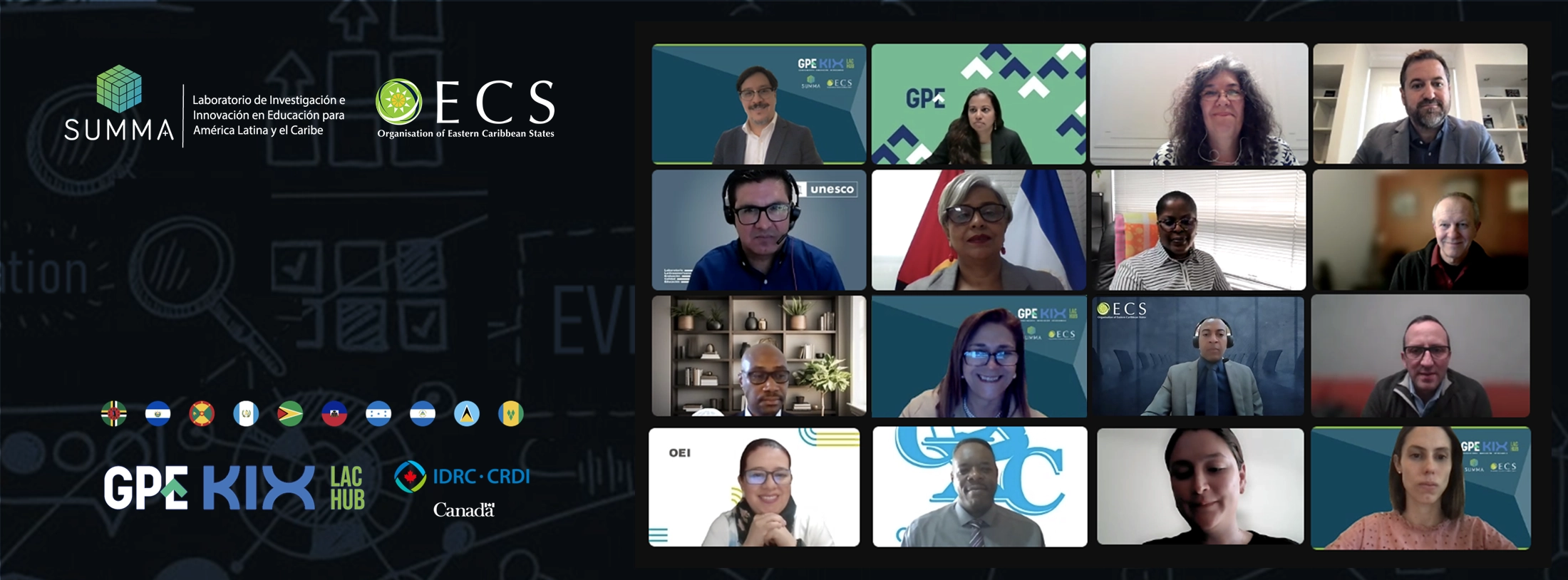
SUMMA and OECS through KIX LAC with the support of the Global Partnership for Education (GPE) and the International Development Research Center (IDRC) conducted the webinar Promoting the Monitoring of Student Learning Outcomes: National and International Assessments for Educational Improvement The event was attended by more than 150 participants (managers and representatives of ministries of education, teachers’ unions, researchers, teachers, among others) from Latin American and Caribbean countries.
The seminar was held in the framework of the launch of the second sub-cycle of knowledge mobilization and community of practice KIX LAC “Use of evidence in education”, aimed at capacity building for the different actors of the educational ecosystem of the countries that make up the KIX LAC Center.
Session #1
The first session addressed the uses of international assessments for educational improvement and the various organizations presented on the importance of using learning outcomes to inform national policy. the importance of using learning outcomes to inform national policy.
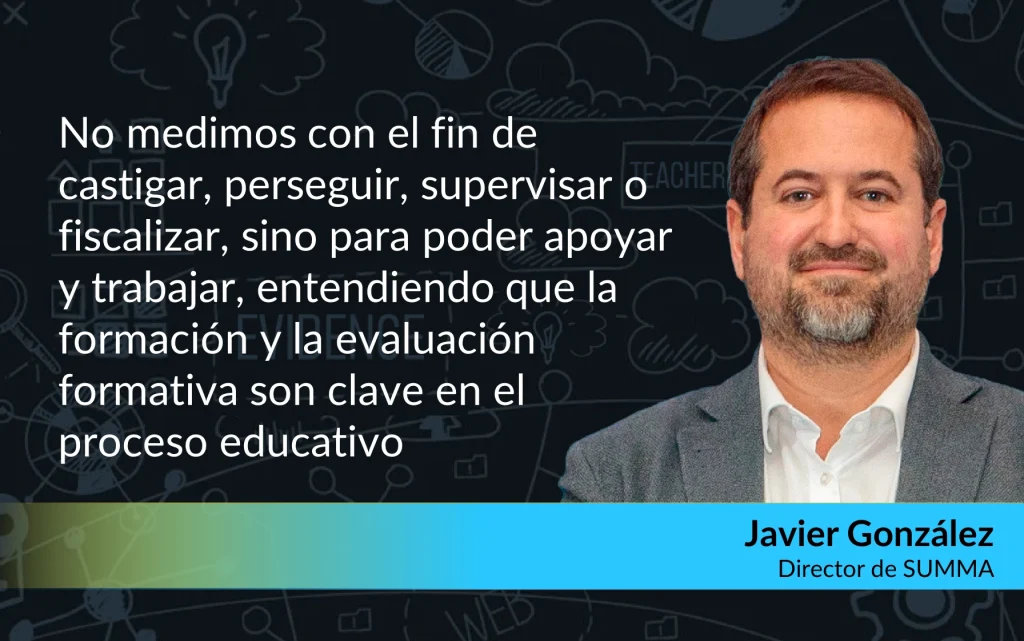 The session opened with a presentation by the director of SUMMA, Javier Gonzalez, who emphasized that “we do not measure in order to punish, persecute, persecute, persecute, persecute, persecute.that “we do not measure in order to punish, to persecute, supervise or supervise, but to support, understanding that training and formative evaluation are key in the educational process”. I add that the evaluation processes must also consider the dimensions of inclusion and equity. “These dimensions must be at the heart of the evaluation to eliminate bias, for example, in the way questions are asked,” he said.
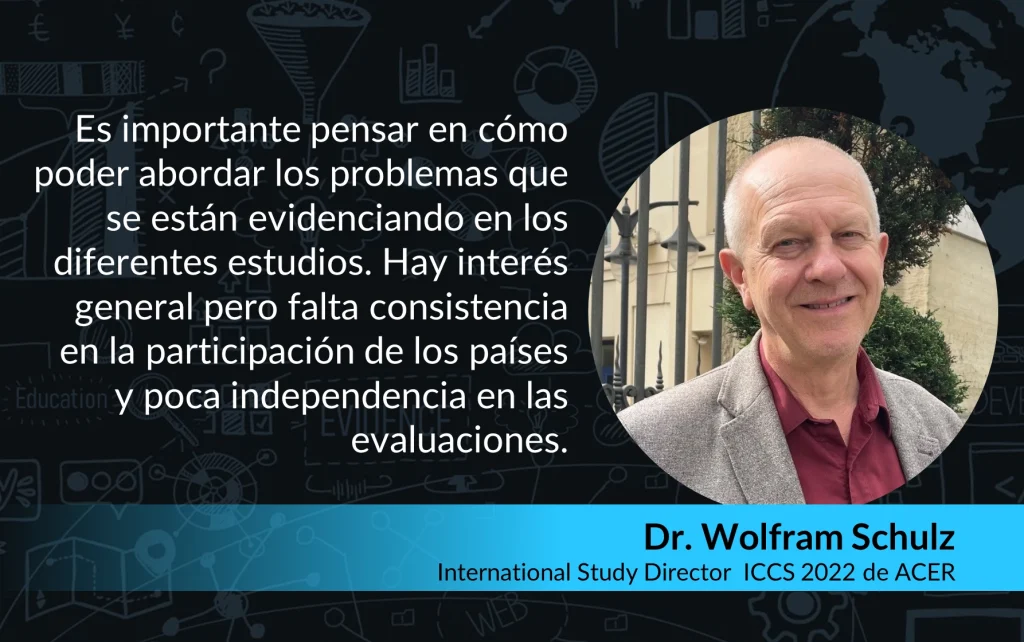 This was followed by Dr. Wolfram Schulz, International Study Director ICCS 2022 of ACER, spoke about the role of international assessments in improving education: ICCS and the challenges in LAC, highlighting that there are many differences between the countries of Latin America and the Caribbean in comparison with Europe and among the same countries in the region, with respect to civic knowledge and it is important to think about how to address the problems that are evident in the studies. As a challenge, he stated that there is a general interest but a lack of consistency in the participation of the countries and little independence in the evaluations.
️ Download ACER Presentation
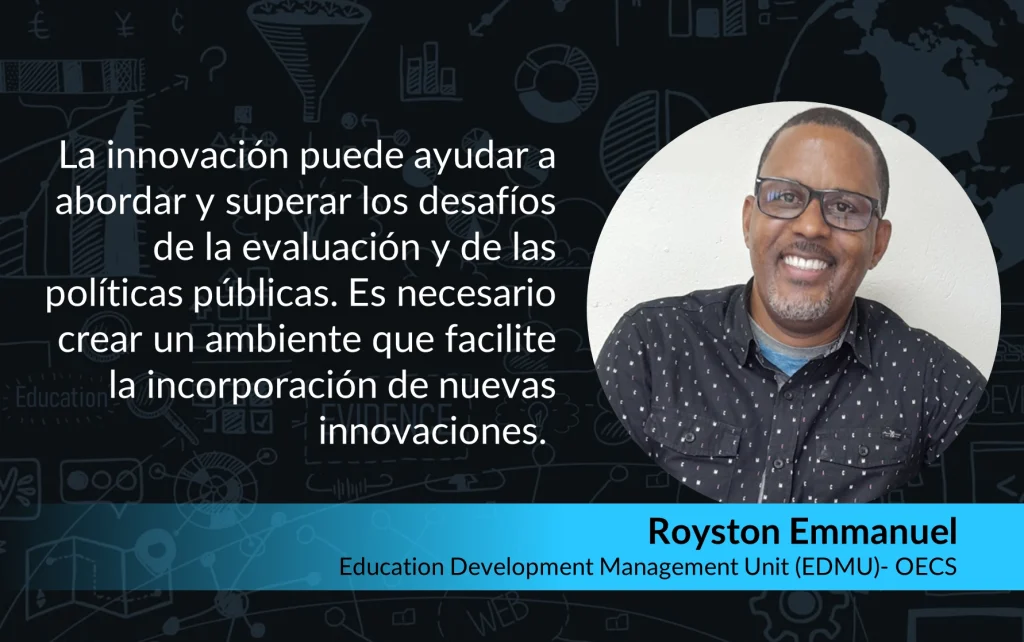 Royston Emmanuel and Rafer Gordon of EDMU- OECS presented the challenges of regional and national measurements in the Eastern Caribbean. Emmanuel particularly showed the case of St. Vincent and the Grenadines and assured that “we need to align data, policies, professional development and teaching practices. We advocate for policy, the development of frameworks that support the development of the policies of the member countries of our community. We have teams that support the development of these national assessments in mathematics and literature”. He stressed the role of innovation that “can help address all the challenges of evaluation and public policy, and called for “creating an environment that facilitates the incorporation of new innovations”.
️ Download presentation EDMU – OECS
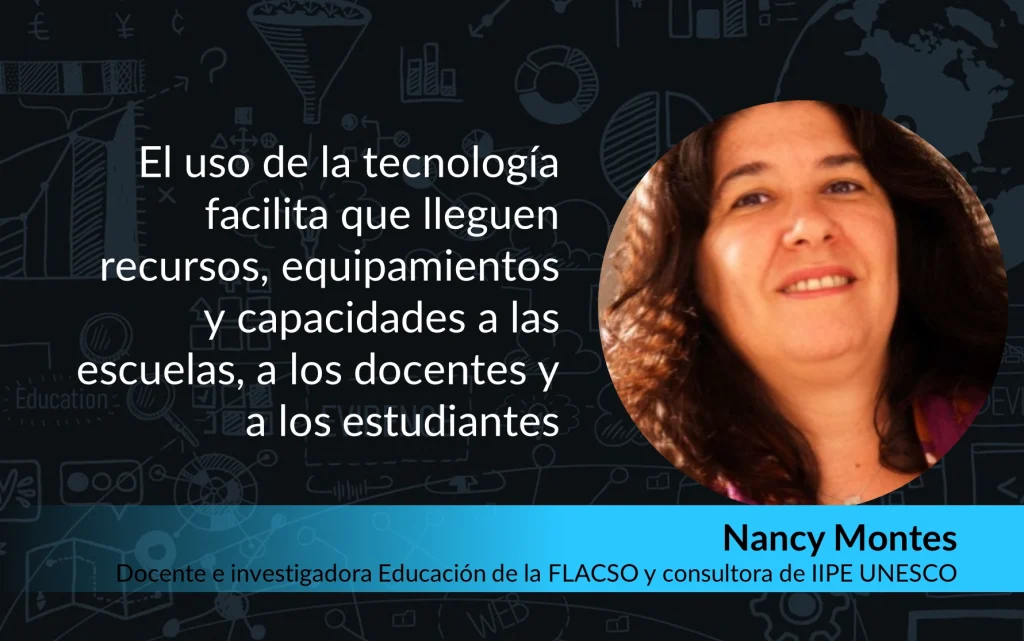 Nancy Montes, professor and researcher of the Education Area of FLACSO and consultant of IIEP UNESCO, presented the various uses of the operational results of large-scale learning assessment for the planning of educational policies, and stated that “although the normative frameworks allude to the integral conception of assessment with multiple components, the bias towards the implementation of tests in traditional subjects has prevailed”, as the study sharesstudy by IIEP UNESCOThe use of learning assessment test results in educational policy planning in Argentina.
He also highlighted thehe performative nature of the evaluations, particularly when they seek to incorporate technological aspects that often constitute a floor not yet covered in some areas such as urban or marginal areas, and considered that the use of technologies facilitates the delivery of these resources, equipment and capabilities to schools, teachers and students.
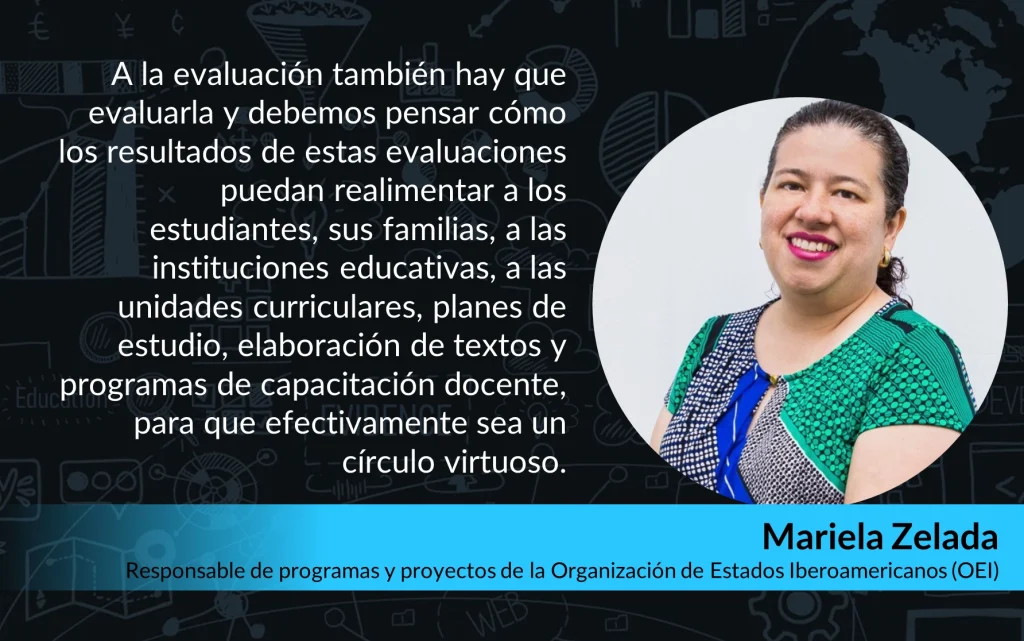 For its part, Mariela Zelada, responsible for programs and projects of the Organization of Ibero-American States (OEI).He called for continued insistence on the importance of building a culture of evaluation and accountability, both at the macro and micro levels. He also stressed the importance of using evaluation as an input for the educational system and planning to improve educational policy. “The evaluation also needs to be evaluated….We have to think about how the results of these evaluations are used at the level of the Ministry and other actors in the system, so that they can effectively provide feedback not only to students, their families and educational institutions, but also to other curricular units, study plans, textbook development, teacher training programs, so that there is a virtuous circle and the evaluation is effectively used as an input for the system to improve educational policy”.
The following discussion and question and answer session allowed participants to reflect on the use of international assessments for educational improvement. on the use of international assessments for educational improvement and a synthesis of the day’s key issues was made.
Session #2
The second day explored the impact and lessons learned from the use of national assessments in educational improvement, highlighting examples and effective strategies.
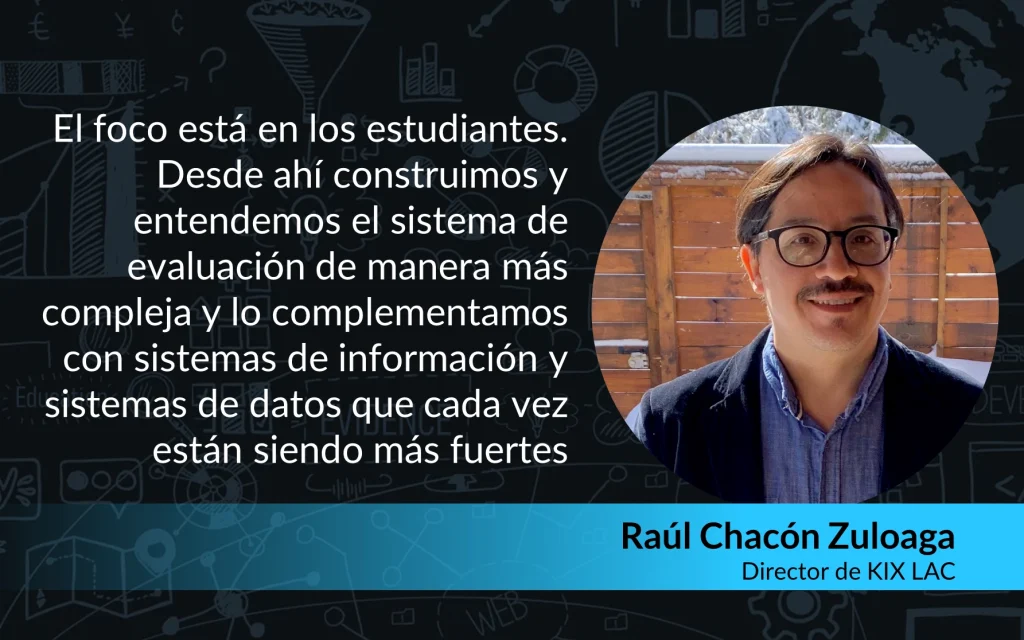 The session began with a few words from the director of KIX LAC, Raúl Chacón, who thanked those who make this work possible, especially the representatives of the Central American and Caribbean countries for creating a space for dialogue, learning and the exchange of questions for reflection. He also assured that The global learning crisis caused by the pandemic is at the center of the education agenda, but in the Latin American region it is even stronger, hence the importance of strengthening and promoting these spaces. Finally, he pointed out that “we are in a cycle that we call knowledge mobilization around the use of evidence, and this one in particular is important to us because it puts educational improvement at the center based on recognition, the center is in the students and from there we build and understand the evaluation system in a more complex way and complement it with others such as information systems, data systems that are also becoming stronger and stronger”.
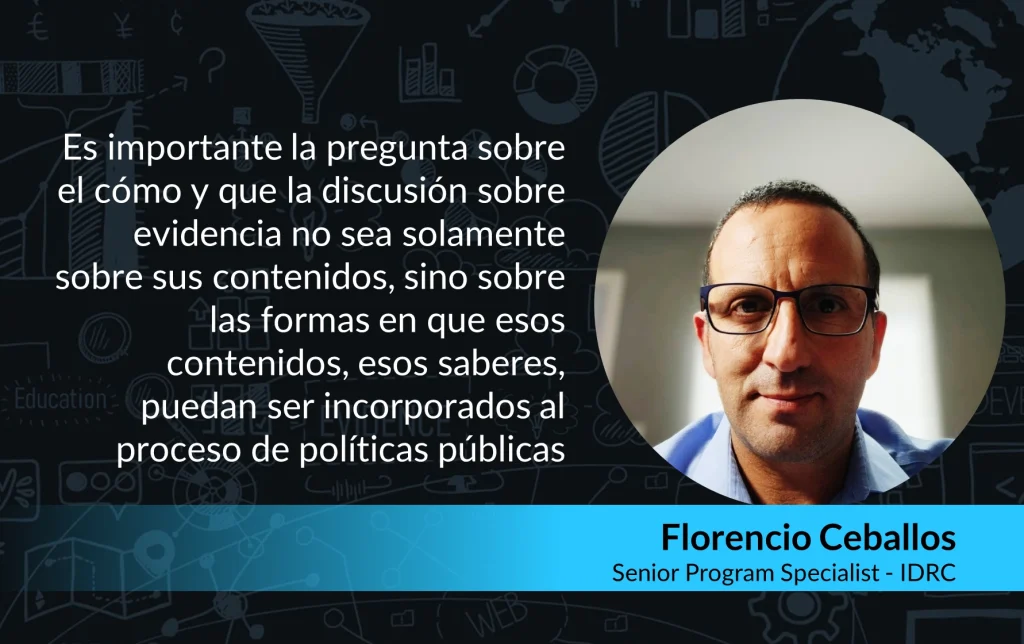 Next, Florencio Ceballos, IDRC Senior Program Specialist, thanked SUMMA – KIX LAC for the initiative, highlighting its role as a means for the dissemination and circulation of this great research. In this sense, he stressed the importance of reflecting on how the evidence of this research can be taken to local spaces, schools, communities and regional academic debate, and how it can be taken even further. “It is important to ask how and that the discussion on evidence is not only about its content, but also about the ways in which this content, this knowledge, can be incorporated into the public policy process,” he added.
“Uses of the ERCE test for the planning and improvement of educational policy in national contexts” was the presentation of Carlos Henriquez., Coordinator of the Latin American Laboratory for Assessment of the Quality of Education (LLECE) of UNESCO. “Improving is not easy and not everything works for everything. When talking about evaluation, it is important to think about how we translate it into products and actions that can contribute to the improvement of public policy, implementation and teaching,” he said. He added that “an evaluation is not just a number, but how this number translates into a policy, public and pedagogical implication”. -To be able to concretize the use of evidence in education, we need to diversify, to have more instruments for different decisions, and to develop both external and internal capacities,” he warned. And he mentioned as a challenge “how we address and enrich the information for each of the countries”.
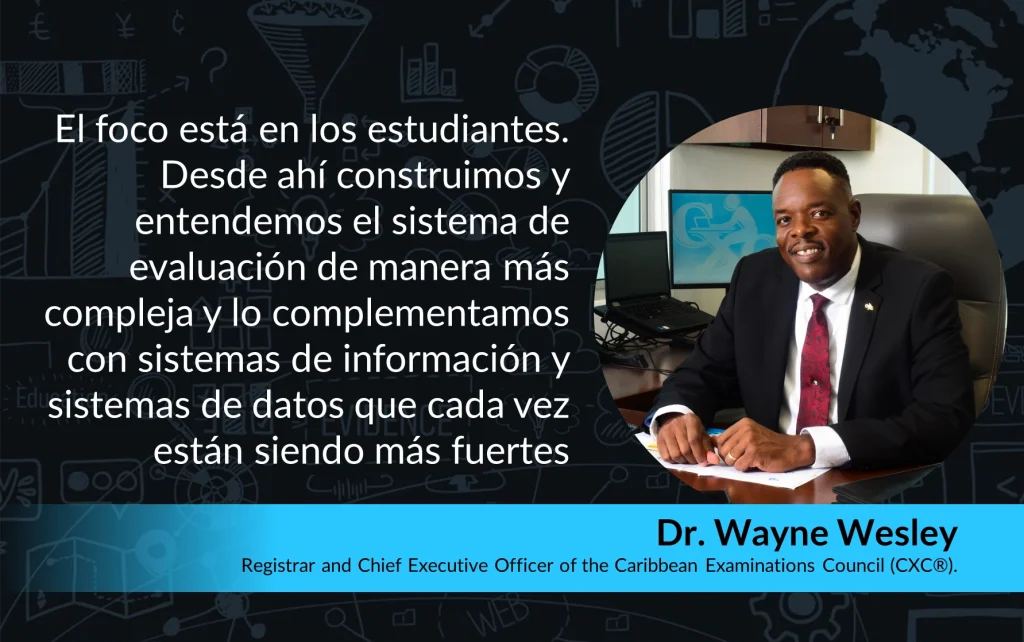 Dr. Wayne Wesley, Registrar and Chief Executive Officer of the Caribbean Examinations Council (CXC®)presented the strategies and lessons learned from the Use of National Assessments for Educational Improvement in the Caribbean and presented the Data Intelligence Portal (CDIG). He assured that “in the Caribbean there is an immense effort to transform the educational system”. “If the system is not producing individuals with the necessary skills then the region’s competitiveness will suffer,” he warned. “When we analyze the data we recognize that a large number of students leave without subject certification,” he said.
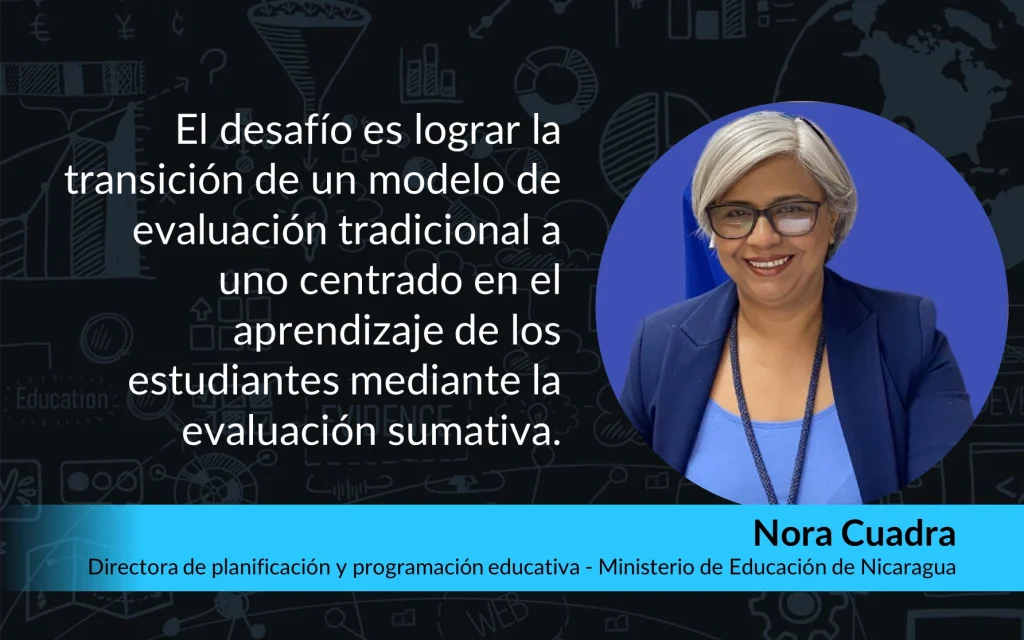 Next, Nora Cuadra, General Director of Educational Planning and Programming at the Ministry of Education of Nicaragua, spoke about Nicaragua’s experience in the use of national assessments for educational improvement. The official pointed out that “we are aware that in order to move forward, the entire educational community must be informed about the challenges and strategies that we require for our 2022-2026 education plan, in which we include 8 specific five-year strategies”. He posed as a challenge “the transition from a traditional assessment model to one focused on student learning through summative assessment”.
⬇️ Download presentation
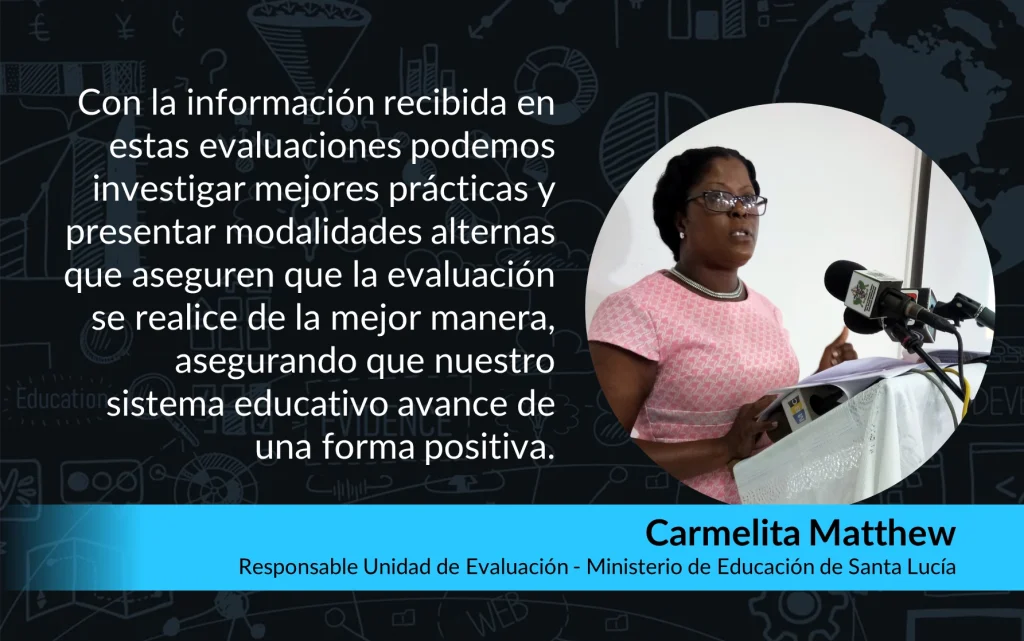 Carmelita Matthew, head of the evaluation unit of the Ministry of Education of Saint Lucia, presented the case of her country. “With the information received in these assessments, which are done in second and fourth grade, we can monitor different schools in terms of the performance of their students and in different components of the areas measured or assessed. We can also investigate best assessment practices and come up with alternate modalities that ensure that assessment is conducted in the best way for both students and teachers, ensuring that our education system moves forward in a positive way,” he recounted.
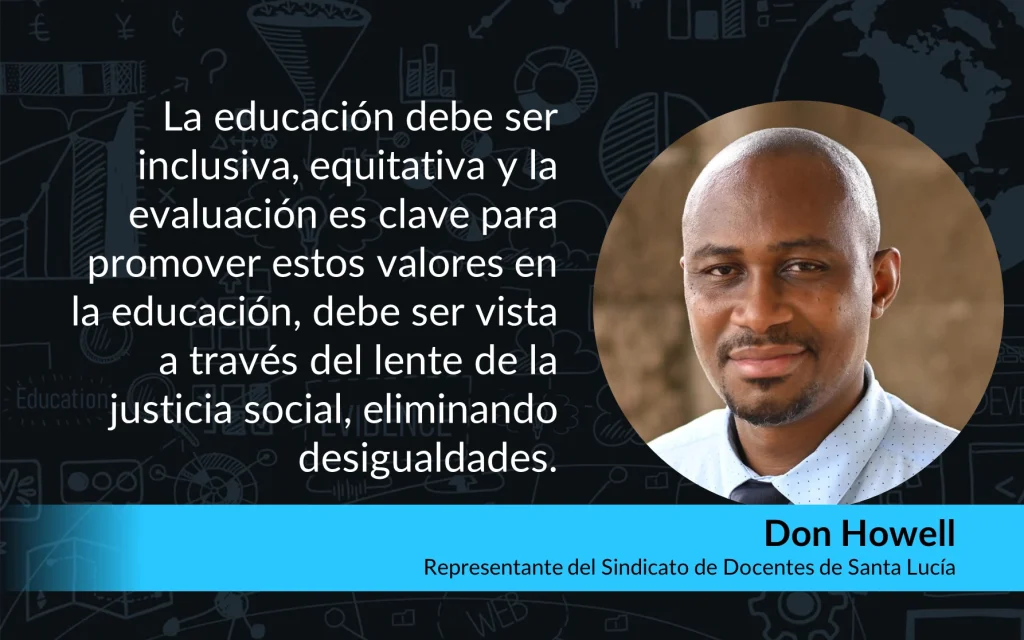 Don Howell, representative of the St. Lucia teachers’ union, congratulated SUMMA and OECS for cycling in use of evidence, and stressed the importance of making more nationally and regionally as well. “Education must be inclusive, equitable, and assessment is key to promoting these values in education. Assessment must be seen through the lens of social justice, eliminating inequalities,” he added. Regarding the evaluation, he considered that “should inform teacher training programs, eliminate stigmatization and the competitive mode of evaluation in schools, and should inform action research.”
️ Download presentation
This was followed by a discussion segment, where questions were answered and a space for interaction with the attendees was opened.
Closing remarks were given by Ramya Vivekanandan, GPE’s head of teacher evaluation and learning. “We have been hearing and talking for years about the education crisis, but we can’t improve children’s learning if we don’t have data on that learning,” he said. “At GPE we prioritize not only the evaluation but the more macro context in which it happens and its quality,” he added. And he reminded that “evaluation is about learning, using data to improve practice, it is a collective effort that we have to work collaboratively”. “I hope we can continue to collaborate,” he concluded.
The primary purpose of the knowledge mobilization cycle is to address current challenges in the region and to promote a data-driven approach to improving educational quality and equity, especially in the post-COVID-19 context. This cycle is structured in three thematic lines, the first one being “Using Evidence for Institutional Change”, already addressed in previous webinars, and the second one, which we will work on in the following exchange spaces, which will focus on the essential question: How to use learning assessments for educational improvement?
Do you want to join our community of practice Use of evidence in education?
In the coming days we will provide information on how to participate and the agenda of activities that will take place in the Community of Practice. More information: send an email to Mar Botero mar.botero@summaedu.org
* The cycle is made up of 3 thematic lines: 1. Use of evidence for institutional change, 2. Monitoring and evaluation of student learning in the context of the learning crisis, and 3. Educational Management Information and Data Systems (EMIS) for improving educational equity and inclusion. On this occasion, and to work on the first line of action, specialists from the OECD, EEF, SUMMA, Education.org, OECS, the Global Partnership for Education (GPE KIX), the Ministry of Education of El Salvador and the International Development Research Centre (IDRC), shared the work that each of the organizations has been doing on the use of research and evidence in the education sector.
Related content


Strategic partners