Who are we?
Governance and Transparency

Governance and transparency
SUMMA’s governance structure is made up of two entities: the Board of Directors and the Educational Policy Advisory Council. Under its guidelines is SUMMA’s Executive Directorate, based in Santiago, Chile.
The Board of Directors is made up of distinguished experts, former ministers of education and academics from ten countries in the region. The Advisory Council for Educational Policies (CAPE) is made up of Ministers, Vice Ministers and/or senior representatives of the Ministries of Education and National Institutes of Educational Evaluation of SUMMA member countries. The CAPE is the body in charge of ensuring the representativeness, impact, relevance, and political legitimacy of SUMMA’s work agenda.
SUMMA Board

Cristián Cox - President (Chile)
Teacher at the Faculty of Education and Director of the Centre for Comparative Education Policies, Universidad Diego Portales, Santiago.

Emiliana Vegas - Director
Professor at Harvard Graduate School of Education

Nivia Castrellón - Director (Panama)
Vice President of the United Foundation for Education and Co-President of the Central American Commission for the educational reform of PREAL

Enrique Chaux - Director (Colombia)
Teacher, Psychology Department, Universidad de los Andes.

Santiago Cueto - Director (Peru)
Executive Director and Principal Investigator of GRADE

Monserrat Creamer Guillén - Director (Ecuador)
Postgraduate professor of education at the Universidad Espíritu Santo and Former Minister of Education of Ecuador

Javier González - Director and Secretary (Chile)
SUMMA director and affiliate professor at Cambridge University.

Sylvia Schmelkes - Director (México)
Academic Vice Chancellor at the Universidad Iberoamericana.

Claudia Costin- Director (Brazil)
Founder of the Innovation and Excellence in Education Policies Study Group

Rafael Carrasco
SUMMA Deputy Director
Education Policy Advisory Council
It is made up of ministers, vice-ministers, and senior representatives of ten ministries of education in the region.


Transparent financing
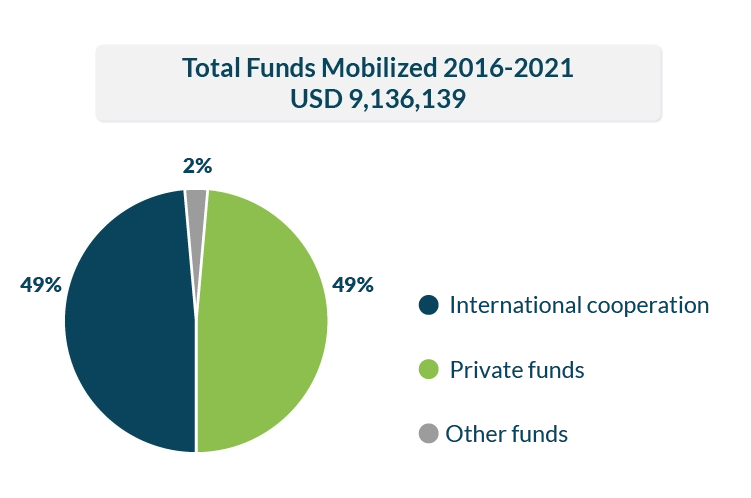
The Inter-American Development Bank (IDB), through the Regional Public Goods Initiative, financed a significant part of the budget for the first four years of SUMMA’S work.
Complementarily, since 2018, SUMMA has financed its operation through strategic alliances with ministries, NGOs, donor governments, international agencies, among others, for the implementation of national and regional projects. By doing this, SUMMA has managed to consolidate a transparent financing model that allows it to guarantee its financial sustainability and autonomy, to adequately fulfil its mission.
Institutional Policies and Transparency
FECU SOCIAL 2021
Learn MoreFECU SOCIAL 2020
Learn MoreCONVENIO SUMMA-CPEIP
Learn MoreCONVENIO SUMMA-CPEIP
Learn MoreStrategic partners