BACK TO ALL NEWS
1️⃣ | In the IDB’s Early Childhood Development Sector Framework document, it is emphasized that measuring child development and the quality of services is fundamental for designing effective policies and equitably allocating resources. Why do you believe that these evaluations are essential for guiding investments in early childhood? What strategies would facilitate the effective translation of the evidence generated into decisions that improve the quality of services?
Transforming Early Childhood Policy: The Role of Measurement and Evidence in Latin America
December 2nd, 2025.
2 de December de 2025
KIX
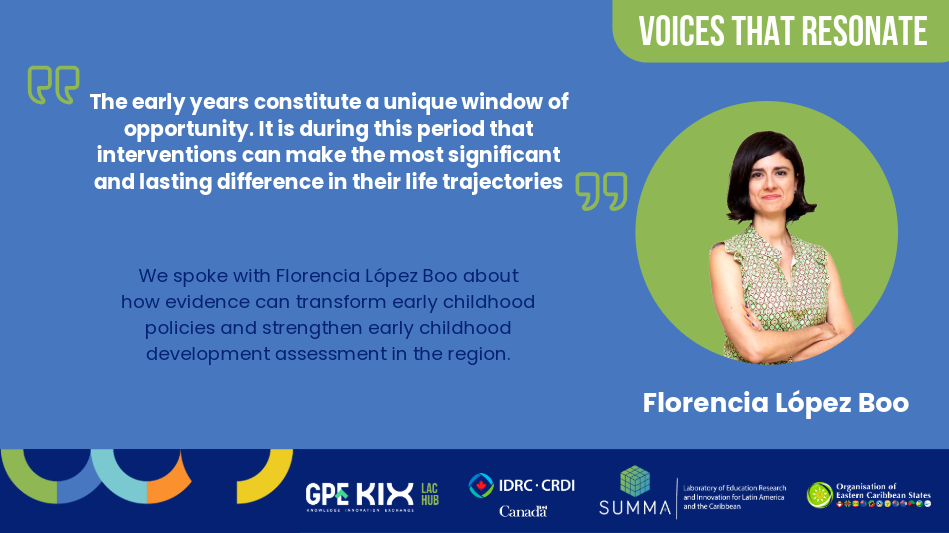
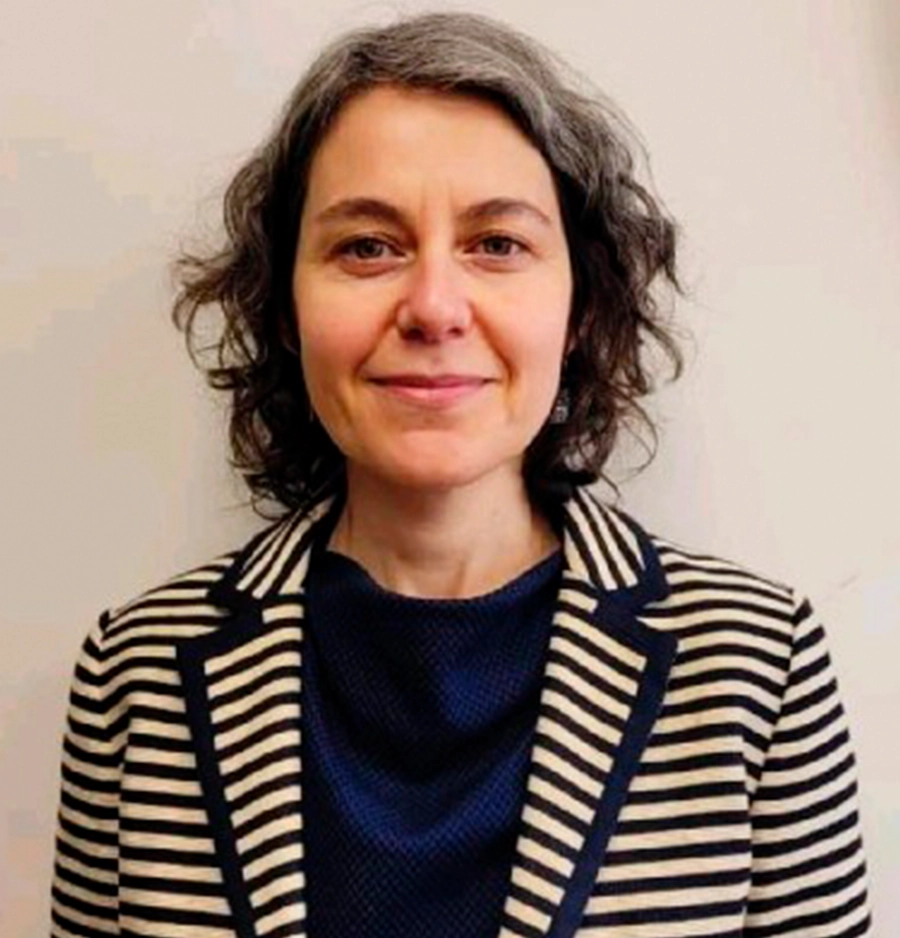
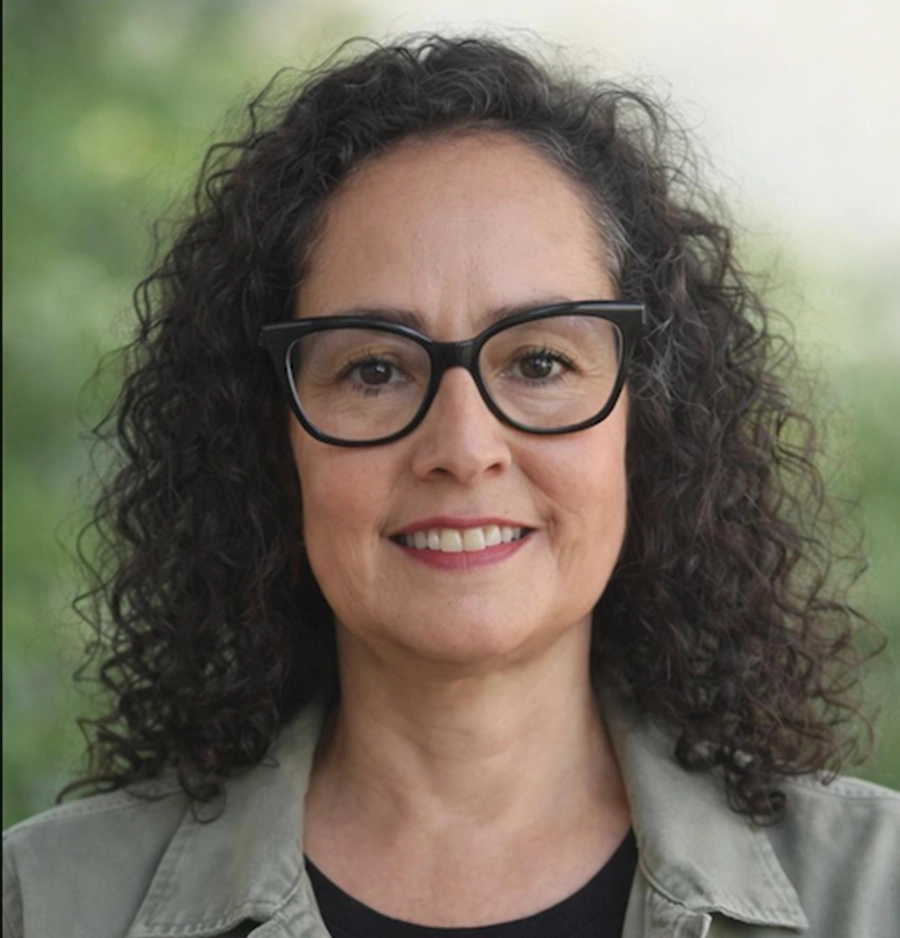
Interview with Florencia López Boo, Director of the Global TIES for Children Research Center at New York University, conducted by Catalina Godoy, Research and Evaluation Assistant, KIX LAC – SUMMA.

❝The measurement and evaluation of early childhood development are fundamental because without them we would be making public policy blindly.❞
Florencia López Boo is Director of the Global TIES for Children Center at New York University and Professor of Economics and Applied Psychology. D. in Economics from Oxford University, she previously served as a Senior Economist at the Inter-American Development Bank (IDB), where she led the Early Childhood Development agenda and policy work based on behavioral economics. His career focuses on rigorous evaluations of early childhood programs and social policies in Latin America and the Caribbean, advising several governments in the region. She has published in journals such as The Lancet, Pediatrics and Journal of Development Economics, and her research has contributed to driving public policy reforms. She is also a research associate at Young Lives (Oxford) and the IZA in Bonn.
In this new edition of Voices that Resonate and as part of the Knowledge Mobilization Cycle: Use of Evidence for the Early Childhood Education and Care, Florencia López Boo and Catalina Godoy reflect on how measurement and evidence can transform early childhood policy in Latin America. The conversation addresses the progress, challenges and opportunities for strengthening early childhood development (ECD) assessment in the region under the IDB’s current Early Childhood Development Sector Framework.
The 2024 update (relative to the 2019 version) incorporates recent evidence on how the pandemic deepened development gaps and transformed service delivery, as well as integrates advances in measurement, quality, economics of care, and implementation strategies at scale. This review addresses critical gaps: the impact of COVID-19, the challenges of scaling up with quality, the absence of population-based measurement of ECD, and the need for multi-sectoral approaches that consider gender, care economy and staff working conditions.
From her expert perspective, Florencia analyzes the importance of measuring both child development and the quality of services, the need for interoperable information systems, the role of evidence in decision making and the tensions faced by the region in consolidating effective monitoring systems. The conversation also explores how strategic frameworks and rigorous evaluations can help design more equitable policies, strengthen pedagogical practice, and promote cross-sector collaboration. An interview with valuable guidance for moving toward systems that truly improve the lives of children from their earliest years.
1️⃣ | In the IDB’s Early Childhood Development Sector Framework document, it is emphasized that measuring child development and the quality of services is fundamental for designing effective policies and equitably allocating resources. Why do you believe that these evaluations are essential for guiding investments in early childhood? What strategies would facilitate the effective translation of the evidence generated into decisions that improve the quality of services?
The measurement and evaluation of early childhood development are fundamental because without them we would be making public policy blindly. It is not possible to design, for example, an effective policy to fight chronic malnutrition if we do not know its magnitude, the populations affected or the priority geographic areas. In essence, measurement allows us to guide public policies based on real evidence, not on assumptions or improvisations. I would also like to emphasize that it is precisely thanks to the systematic measurement of key indicators – such as malnutrition, access to preschool education, poverty and vaccination – that we know that the situation of children has improved significantly. We have seen important advances in child mortality and morbidity, but in addition, we now have much richer and more specific information on child development than before.
Let me highlight four important advances in measurement. First, we have a better understanding of child development thanks to population-based measurement efforts. For the past decade or so, we have had four longitudinal surveys specifically on early childhood in Chile, Colombia, Uruguay and Peru. These allow us to observe the evolution of multiple indicators – of children, their parents, caregivers and services – for the same group of children over time. Previously, we had to settle for data from developed countries or use proxy indicators, which greatly limited our ability to design policies relevant to our contexts. Second, we now have a better understanding of access to services because this information is systematically collected in household surveys, which was not the case before. Third, we increasingly know more about the quality of these services thanks to initiatives by the IDB, which has promoted the validation and use of cost-effective instruments to measure quality, to inform monitoring and continuous improvement processes. And fourth, in the last five years there have been extraordinary advances in the evaluation agenda at scale. Just five years ago we had very little to say about the impact of interventions in our region, but at the time of writing the early childhood sector framework we already had a considerable body of evaluations, many of them financed and led by the IDB.
As to what strategies could facilitate the effective translation of this evidence into programmatic or pedagogical decisions, I believe we should learn precisely from the three pillars I have just described: the measurement of development indicators, the measurement of the quality of services and impact evaluation. When policy makers have these three components articulated, evidence has much greater potential to be transformed into concrete decisions that improve the quality of early childhood services.
2️⃣ |The Sector Framework defines ECD as the development of cognitive, language, motor, and socioemotional competencies during the first five years. What dimensions should be prioritized in assessments to comprehensively reflect children’s well-being and potential?
This is an extremely interesting question because the answer will depend significantly on the specific regional context. Measurement priorities must be tailored to the reality of each country. First, health and nutrition remain essential dimensions in certain contexts. For example, in countries such as Haiti, Guatemala or Bolivia, it is essential to continue measuring maternal and child health and undernutrition components. Even in countries with greater progress, pockets of vulnerability persist: in my own country, Argentina, the northern provinces still face problems of chronic malnutrition.
However, it is important to make a caveat: when resources are limited and a country has already largely overcome these challenges, it may not be necessary to duplicate efforts in these areas. The real focus is on measuring comprehensive child development. With respect to child development itself, we must consider multiple dimensions: fine motor, gross motor, socioemotional, language and cognitive. All these areas make up the holistic development of the child and are fundamental to capturing how the child is meeting certain developmental milestones. However, several studies reveal that socioeconomic gradients – that is, gaps between lower- and higher-income families – are most pronounced in two specific areas: language development and cognitive development. These dimensions appear to be particularly sensitive to the child’s stimulation environment, and should therefore be prioritized in assessments.
Finally, just as I pointed out that in some contexts health and nutrition are unavoidable, socioemotional development takes on critical importance in populations that have experienced conflict or displacement. For example, when assessing young children who have undergone long migration journeys on foot, we must keep in mind that a traumatized child cannot learn adequately. In these cases, capturing the socio-emotional dimension becomes essential for designing relevant interventions.
3️⃣ | The paper mentions recent advances in cost-effective and comparable instruments-such as the MICS (UNICEF) and the Global Scales for Early Development (WHO)-along with national and longitudinal surveys. However, challenges of comparability and cultural adaptation remain. What characteristics should child development measurement instruments have to be rigorous, comparable across countries and, at the same time, sensitive to the cultural and linguistic diversity of the region?
This question poses a complex challenge, because making an instrument simultaneously rigorous, internationally comparable and culturally sensitive is extremely difficult. Let me illustrate this with two examples that represent extremes of a continuum.
On the one hand, we have UNICEF’s MICS surveys, which are already highly institutionalized in countries and funded by UNICEF. They have been applied approximately every five to seven years in about 120 countries since the mid-1990s. Their great strength is their comparability: because they are measured in the same way in multiple countries, they allow for cross-national analysis and countries can monitor their progress over time.
However, this comprehensiveness comes at a cost. Because it is a large-scale measurement with multiple thematic modules, only a small portion is dedicated to child development. The Early Childhood Development Indicator includes only a few items depending on the version, and not all are directly observational. This limits the depth and scope of the measurement.
Still, its value is undeniable. For countries with very limited resources, such as Haiti – which conducted a MICS measure about a decade ago – this tool represents the only source of information on child development available.
At the other end of the continuum are the Global Scales for Early Development (GSED), developed by WHO. These instruments are highly rigorous: they were designed by experts, validated through multiple pilots in diverse settings, are culturally adapted, and offer high measurement accuracy. However, they are more costly to implement and have not yet been massively scaled.
So what should be the ideal characteristics? The instruments must meet sound technical criteria: predictive validity, concurrent validity and good psychometric qualities. At the same time, they must be adapted to the cultural and linguistic diversity of each region and country.
The greatest remaining challenge, however, is still comparability between countries. In this regard, the MICS continues to be the most viable instrument for carrying out this exercise on a regional scale.

❝The complete document plus the short and friendly version, plus instances of one-to-one exchange […] is what really allows evidence to circulate and translate into better policies❞.
4️⃣ | The IDB distinguishes between structural quality (infrastructure, equipment, child-caregiver ratio, staff training) and process quality (interactions, warmth, encouragement, language). The document points out that the latter -more linked to children’s learning and well-being- is usually more difficult to measure and requires observational or qualitative methodologies. How can countries move towards quality evaluation systems that integrate both structural and process aspects, and that serve to improve pedagogical practice and not only for accountability?
Almost all Latin American countries have some system of ministerial visits to kindergartens or preschools to supervise structural aspects: bathrooms in good condition, safety, emergency doors, windows, furniture adapted to the height of the children, among others. These systems are relatively consolidated. What is less systematized -and this is something we have been studying at the IDB over the last decade- is the evaluation of the quality of processes: pedagogical interactions, warmth of treatment, stimulation, and use of language.
Significant progress has been made in the development of instruments that are more cost-effective than traditional academic instruments, which are the standard of measurement but require a trained person -usually a psychologist- to observe a classroom for three hours. This is extremely costly and logistically complex.
For quality assessment to really serve to improve pedagogical practice and not just for accountability – although the latter is also important for the allocation of funding – I think the key is to build on existing systems. When countries send a territorial supervisor or facilitator to conduct structural quality visits, they could very well incorporate a second component: training that same facilitator or territorial agent or cascade training for a short 40-minute observation using validated instruments. This is a strategy that we have implemented in Uruguay, Argentina and Nicaragua, using observational checklists.
The idea is to unify these visits, take advantage of the displacement that is already taking place and use validated but shorter instruments. This is much more cost-effective than hiring a psychologist to conduct an additional three-hour visit at another time.
5️⃣ | Despite progress, the Sector Framework recognizes knowledge gaps and tensions: lack of comparable data, shortage of interoperable systems, little sustained investment in monitoring, and the risk of using assessments in a punitive way or disconnected from continuous improvement. What do you see as the main challenges facing the region in consolidating systems for assessing child development and service quality? How can they be overcome so that the information really contributes to better policies and practices?
This question addresses two fundamental issues. The first is interoperability of systems. I have worked with many Latin American countries that have wonderful but fragmented data. Brazil, for example, has the Cadastro Único de Beneficiarios, which registers line by line its entire population below the poverty line: income, number of children, and family composition. It is an extraordinary database, but it is not as well integrated with the databases of the Ministry of Education or the Ministry of Health.Interoperability to achieve a nominal system for monitoring children and their families is an operational task that may seem tedious, but it is absolutely key to being able to effectively monitor child development.
Chile, with the Chile Crece Contigo system, is probably one of the countries that has advanced the most in this aspect. Some cities are making efforts: the City of Buenos Aires developed “El Porteño”. However, the challenge of interoperability continues to be the greatest regional obstacle, because without it we have pieces of information that do not communicate with each other. The second challenge is how to use the assessments so that they really contribute to policies. As mentioned earlier, this requires having regular and cost-effective measurements that policy-makers can use on time. Without accessible, timely and understandable data, evidence cannot be translated into better policy.
6️⃣ | In line with the previous question and focusing on the issue of the importance of evidence, while the ECD Sector Framework document brings together lessons learned, lessons and strategic orientations to strengthen early childhood policies in the region, how do you think countries could use this or other documents to guide their plans, programs or reforms? What opportunities does it offer to promote intersectoral dialogue and regional cooperation?
This question goes right to the heart of why we invested so much effort in producing these documents. Clearly, we put a lot of work into the Sector Framework: the core team was 5 people and we have a dozen collaborators, multiple institutional reviews within the Bank, a full year of work until it reached the IDB Board of Directors, the President himself, and the Vice-Presidency. So much effort invested cannot simply remain in a computer, in 100 pages that no one will download.
That is why your question is totally relevant. Let’s face it: nobody is going to read all those pages. Maybe some interested academics or an extremely motivated minister will read some specific section, but not the whole document. That’s why a blog was generated with a very concise three or four-page summary. I think it is essential to have a short, user-friendly version with graphics to facilitate access to the main contents. This is an important first step. However, even this does not completely solve the problem, because people still do not know that the IDB produced this document. So every time I have a conversation – even if I’m not working at the IDB today – I mention this resource: “Look, there’s a recent literature review that guides policy. Do you want to know what the most current studies say about conditional cash transfers to improve child nutrition? Or parental leave? What are the risks of expanding day care centers or day care centers without quality assurance? It’s all there.”
But the document alone is not enough. Opportunities to promote intersectoral dialogue and regional cooperation have to do with generating spaces for exchange such as this one. The IDB has a very valuable instrument called the Regional Policy Dialogue. I was in Mexico a few months ago at one of these meetings, where all the policy makers on a specific topic – in this case early childhood – meet for two days to share progress and discuss the challenges they face in policy implementation.
7️⃣ | To conclude, from your experience, how can the systematic use of evidence transform decision-making in early childhood? Which actors -from ministries to families- should take ownership of this approach, and in which contexts is it critical to implement it?
Excellent question, because this brings us to the political economy of early childhood policies: who should be the champions, the drivers of these changes. It is no coincidence that the two countries with the most consolidated and articulated early childhood policies have had medical presidents: Chile with Michelle Bachelet and Uruguay with Tabaré Vázquez. What made the difference? There was a champion from the presidency itself, someone who, because of his training, has a deep understanding of the processes of child growth and development. Such leadership exists throughout the region. Today, for example, the Office of the First Lady in El Salvador is exercising an important leadership role, promoting a great mobilization around early childhood. At the time, the “De Cero a Siempre” strategy in Colombia was another outstanding example. There are numerous cases that demonstrate this.
One might naively think, “I have a wonderful program, I present it to the minister and he implements it.” But it doesn’t work that way. There is a significant gap that depends on who takes ownership of the initiative, who says “this is worthwhile” and is willing to follow up consistently with their team. I have seen this at the subnational level as well. The mayors in Brazil who have the most knowledge about early childhood development are the ones who end up implementing better policies. I worked with the mayor of Fortaleza, who had a master’s degree in Public Health, and that translated into a program with a lot of political will and resources behind it.
Regarding which contexts it is especially critical to implement an evidence-based approach: I strongly believe that in the most disadvantaged contexts. I’m talking about displaced children, children who have been traumatized by violence, poverty, conflict or climate change. We are currently seeing a lot of displacement in the region due to these causes. In the center that I currently direct – Global TIES for Children at NYU – we work with and have developed expertise in just this group of children. Whenever I participate in roundtables or panels I insist that we must start with the most vulnerable children. Not only as a matter of equity, but because that is where the economic returns on investment are highest and where we have the opportunity to close gaps that are otherwise perpetuated.
The early years are a unique window of opportunity. It is in this period that when well-designed, evidence-based interventions targeted to the most disadvantaged children can make the most significant and lasting difference in their life trajectories.

Closing remarks by Catalina Godoy: The interview with Florencia López Boo reveals why evidence is critical in Latin America today: without robust measurement systems, early childhood policies move forward blindly, wasting resources in a region marked by persistent inequalities, displacement and the lingering effects of the pandemic. Three fundamental lessons emerge from this conversation. First, that measuring child development, assessing the quality of services and generating evidence of impact are inseparable pillars of effective policies. Second, that technical advances – such as longitudinal surveys, cost-effective instruments and evaluations at scale – only translate into action when there is committed political leadership and teams capable of using data on time. Third, interoperability between systems and the gap between evidence generated and its effective use continue to be the greatest regional obstacles. Faced with these challenges, countries and technical teams can take advantage of strategic frameworks such as the IDB’s Sectoral ITD to support reforms, prioritize investments where they are most needed and generate genuine spaces for intersectoral dialogue.
This reflection invites us to understand that measuring, evaluating and continuous learning are not only technical tasks: they are ethical commitments and social justice tools to ensure that every child – regardless of their origin, language or territory – has the opportunity to develop their full potential from the earliest years.
If you are interested in writing a blog with us or participating in the “Knowledge Mobilization Cycle: Use of Evidence for the Early Childhood Education and Care”, feel free to contact Mar Botero (Knowledge Mobilization and Community Engagement Coordinator, KIX LAC) at: mar.botero@summaedu.org
Finally, we would like to extend our special thanks to Magali Pérez Ryzio, Communications Manager, and Mar Botero from KIX LAC for their valuable contributions to this interview.


Strategic partners