BACK TO ALL NEWS
Webinar Gender Equality in Teaching Practices in Latin America and the Caribbean
September 27th, 2024.
27 de September de 2024
KIX
🎥 Watch the webinar
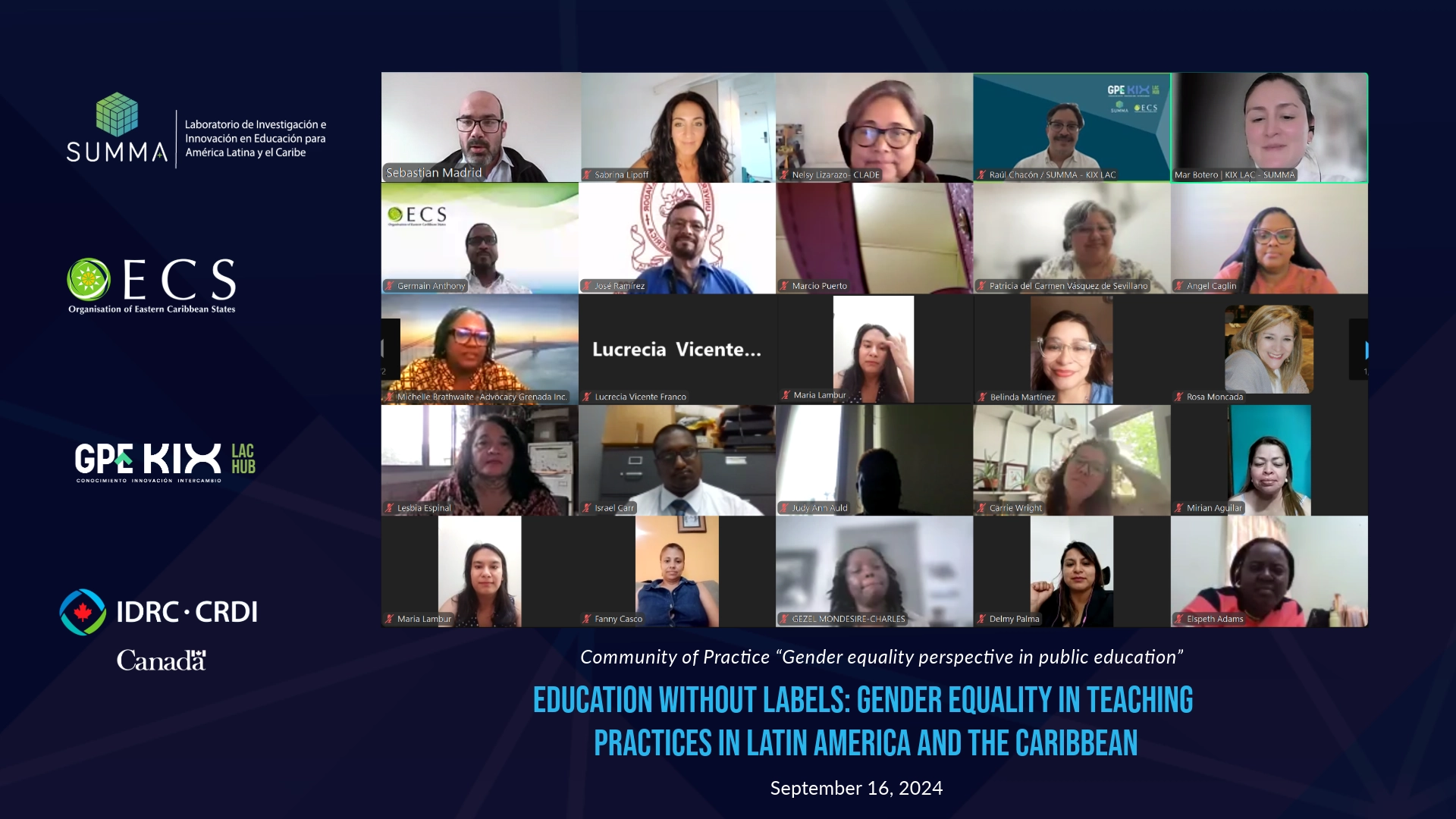
On Monday, September 16, the seminar “Education without Labels: Gender Equality Perspective in Teaching Practices in Latin America and the Caribbean” was held. The meeting was held within the framework of the Community of Practice “Gender Equality Perspective in Public Education” implemented during 2023, and its objective was to promote critical reflection and the exchange of experiences on the incorporation of the gender perspective in teacher training, in order to strengthen equity and inclusion in the education systems of the region. The event was attended by directors and representatives of Ministries of Education, universities such as the Universidad Católica del Norte of Chile and the University of El Salvador, international organizations such as UNESCO, Caribbean Development and the World Vision Foundation, as well as researchers, teachers and other key actors from Central American and Eastern Caribbean countries.
To begin the seminar, Florencio Ceballos, Program Officer at IDRC Canada and Senior Specialist in the KIX Program, highlighted the importance that KIX LAC and IDRC attach to the use of evidence in decision making and in the design of educational policies, stressing that, to ensure the quality of such evidence, it is essential to adopt a perspective that takes into account the dimensions of gender and equity.
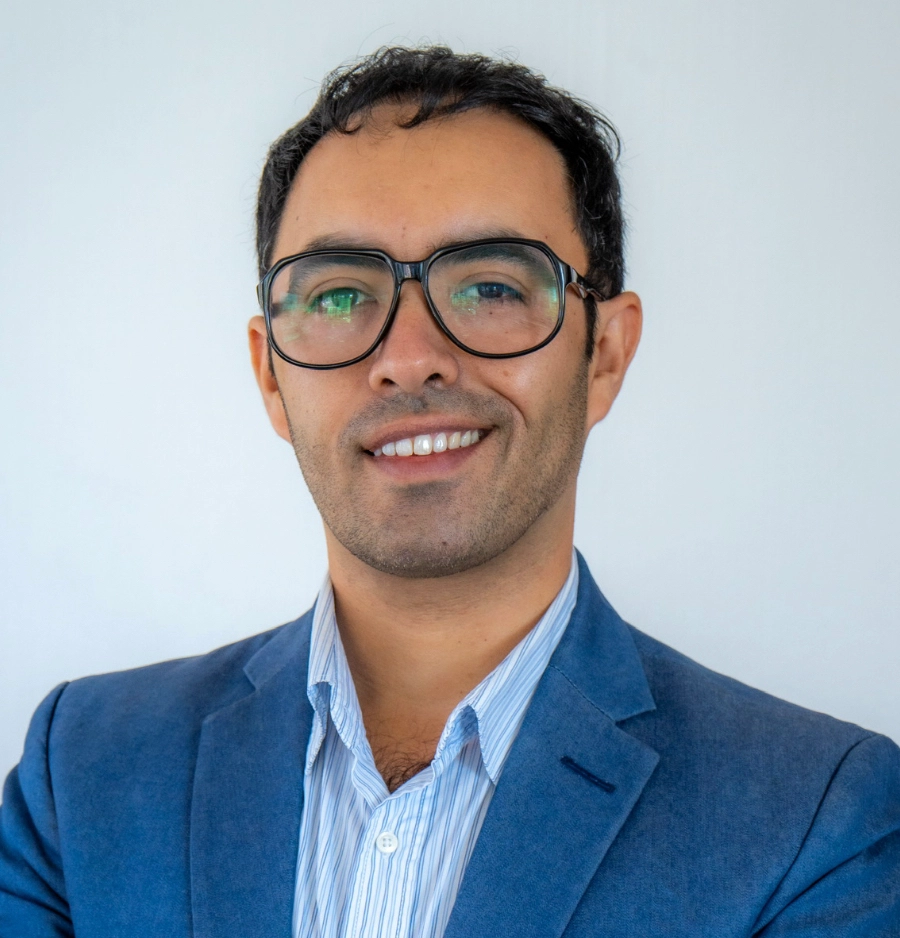
At the beginning of the panel, Sebastián Madrid, Senior Researcher at the Crea Equidad Foundation and professor at the Alberto Hurtado University in Chile, addressed various topics, including how gender can be understood as a structure of social relations; how it affects educational institutions and how this affects teaching practices. He also explored how violence is related to the construction of masculinity, understood in the educational sphere as the set of expectations, norms and behaviors that society associates with what it means to be a man. These expectations influence how boys and young men perceive and express their masculine identity, significantly affecting their social interactions, academic performance and emotional well-being. Madrid also emphasized that the school is a transformative agent and a space where both students and teachers construct gender relations on a daily basis.
Angel Caglin, Executive Director of the Caribbean Innovation & Leadership Lab (CILL), presented the project “Capacity Building for Gender Equity and Inclusion in Caribbean Schools” which will be implemented by Raise Your Voice Saint Lucia, with the support of the Caribbean Innovation & Leadership Lab. This initiative will be part of the KIX Ecosystem of initiatives and seeks to examine gender norms that affect teaching, improve inclusive and gender-responsive educational practices, strengthen the capacity of school leaders, and generate collaboration among educational partners in Saint Lucia, Saint Vincent and the Grenadines, and Dominica. At the systemic level, work is being carried out with Ministries of Education to map how gender affects education and to analyze school leadership. Caglin highlighted the creation of spaces for difficult conversations among educators and a learning community among school leaders, stressing the importance of investigating how school factors influence educational outcomes.
Then it was the turn of Nelsy Lizarazo, General Coordinator of the Latin American Campaign for the Right to Education (CLADE), who spoke about the role of educational institutions as spaces where power relations that sustain gender inequalities are learned and reproduced. She also pointed out how gender-based violence represents a risk factor that can interrupt educational trajectories, affecting the life projects of those who suffer it. Another relevant aspect is the collaborative work with families and caregivers, since gender roles are reinforced at home and if a coordinated work between teachers and families is not established, boys and girls may face contradictions that hinder their comprehensive development.
Sabrina Lipoff, co-founder of the Martinique-based association On Continue! shared her thoughts on the relevance of addressing gender equality throughout the education system. As head of the project “Promoting gender equality in schools”, she also offered those present the material developed for teachers, which consists of a multilingual practical guide and online training. This material enables educators to combat stereotypes, promote gender equality and open up new opportunities for girls.
In the second part of the meeting, there was an exchange of questions and experiences between the participants and the panelists. The topics addressed included punishment as a cultural practice still present in some countries; violence within the family and in the public sphere; and how to promote cultural transformation policies from early childhood.
Raúl Chacón, Director of KIX LAC, emphasized the importance of using an effective curriculum not only for in-service teachers but also for early childhood teacher education programs. He also emphasized the value of recognizing the constant advances in gender equality issues in the region and of continuing to reflect on how to make further progress in this area.
To conclude the meeting, Germain Anthony, Technical Specialist in Education of the OECS Educational Development Management Unit, reflected on the need to examine the problems that occur in schools and how these problems can be addressed to mitigate violence and its negative repercussions on society. He also stressed the need to address the disparities present in the regions of Latin America and the Caribbean from the early stages, underscoring that one of the key aspects to move forward is the commitment to increased funding for early childhood education programs. Finally, he thanked those present and invited them to continue participating in this community and to maintain the effort to achieve significant change in education.
To learn more about the topic and the challenges in the region, visit:
KIX LAC Community of Practice Sessions “Gender and Education”: Videos and Materials
📍To receive more information on the topic, you can update or add your data by completing this survey.
Related content


Strategic partners