BACK TO ALL NEWS
Honduras concludes International Diploma in Competency-Based Education developed with KIX LAC and the University of Talca
June 18th, 2026.
18 de June de 2026
KIX, News
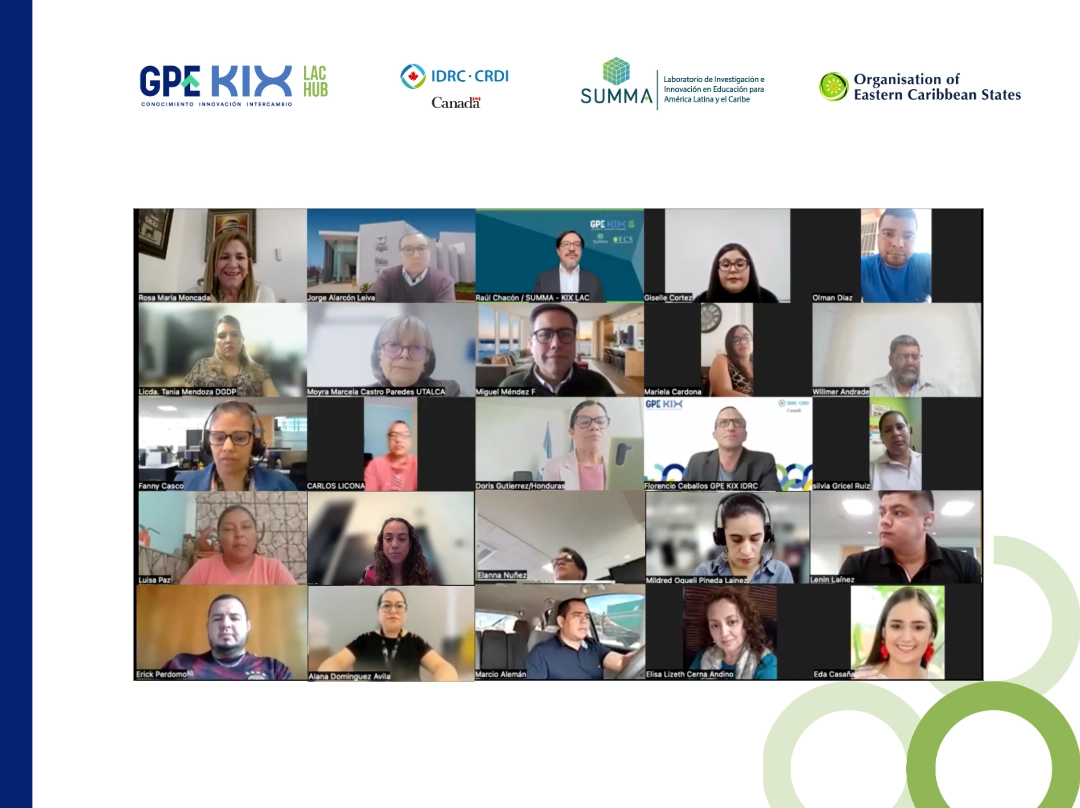
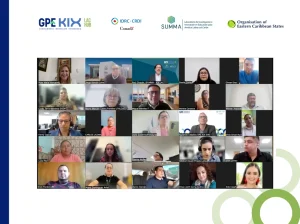
The Ministry of Education of Honduras (SEDUC), together with the KIX LAC Hub, an initiative supported by the Global Partnership for Education (GPE) and Canada’s International Development Research Centre (IDRC), and led in Latin America and the Caribbean by SUMMA and the Organisation of Eastern Caribbean States (OECS), celebrated the completion of the International Diploma in Competency-Based Education, delivered by the Faculty of Competency-Based Education at the University of Talca (Chile).
The programme, which began in August 2025, sought to update and strengthen the capacities of Honduran education professionals and teachers to support the implementation of competency-based educational solutions. Its main objectives included understanding the dynamic relationships between science, technology, society and education; developing curricular and methodological proposals; and designing assessment strategies aimed at the continuous improvement of learning.
The training programme brought together professionals from the country’s 18 departments, as well as technical staff from the Curriculum and Assessment Unit. Through a virtual format combining synchronous sessions and independent work, the diploma programme integrated theoretical content and applied activities to strengthen technical capacities related to curriculum development, teaching and learning assessment. The programme was delivered over five months, totaling 125 hours.
During the closing ceremony, Raúl Chacón, Director of the KIX LAC Hub, highlighted participants’ commitment and the value of a programme aligned with Honduras’ educational priorities. “This is a priority that emerges from the country itself and seeks to be addressed through evidence, research and evaluations that provide concrete guidance on how to strengthen capacities […] and contribute to educational transformation,” he noted.
From the University of Talca, Jorge Alarcón, Director of the Master’s Programme in Competency-Based Education at the Centre for Educational Research and Development and General Director of the diploma programme, described the experience as a collaborative effort aimed at professional and institutional strengthening, particularly emphasizing its territorial reach. In this regard, he stated: “The participation of professionals linked to different departments and levels of educational management within the Honduran education system confirms that continuous professional development becomes more meaningful […] when it helps strengthen capacities where decisions are made, educational communities are supported, and curricular guidelines are translated into concrete practices.”
Representing the participants, Fanny Casco, a Curriculum Unit specialist, highlighted that the diploma programme strengthened knowledge of competency-based education, introduced new methodologies and assessment tools, and promoted a more inclusive approach to teaching and learning processes. She also shared recommendations to expand and sustain similar professional development opportunities.
Giselle Cortéz, the programme coordinator at the University of Talca, noted that the diploma represented an experience of professional growth and pedagogical reflection, emphasizing that the true impact of learning will be reflected in classrooms and in improved educational opportunities for Honduran students.
Similarly, Florencio Ceballos, Programme Officer at Canada’s IDRC and Senior Specialist in the KIX Programme, highlighted that initiatives of this kind strengthen both individual and institutional capacities, and recognized regional collaboration as an effective pathway for advancing sustainable educational transformation.
Representing the Global Partnership for Education, Katherina Hruskovec, Country Lead for Central America and Bolivia, highlighted KIX’s contribution to capacity strengthening and peer learning, emphasizing the importance of sustaining the relationships and knowledge generated throughout the diploma programme.
Finally, Willmer Andrade, Director of Basic Education at the Ministry of Education of Honduras and a participant in the programme, stressed that the diploma represented far more than a series of academic sessions. “It has been a space for analysis, reflection, exchange of experiences and collective knowledge-building, where all the technical staff of the Ministry of Education who participated, together with our fellow teachers, had the opportunity to deepen our understanding of the competency-based approach. This approach is now a cornerstone that will help us move toward the STEAM approach,” he stated.
The experience developed between Honduras, the University of Talca and the KIX LAC Hub demonstrates the potential of collaboration among countries and institutions to address common educational challenges, strengthen technical capacities and promote sustainable educational improvement processes. It also reaffirms the commitment of the Ministry of Education of Honduras to strengthening its technical teams and advancing evidence-informed educational policies and practices aimed at improving learning opportunities for children and young people.
Related content


Strategic partners