SUMMA and EEF International Conference: a space to reflect on evidence for educational transformation and consolidate collaborative networks and shared agendas
July 30th, 2024.
30 de July de 2024
News
Share
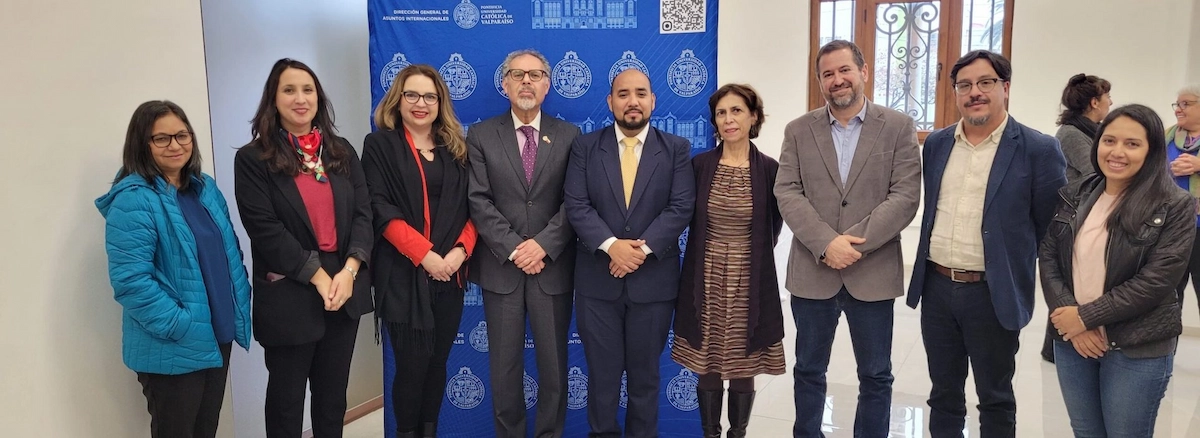
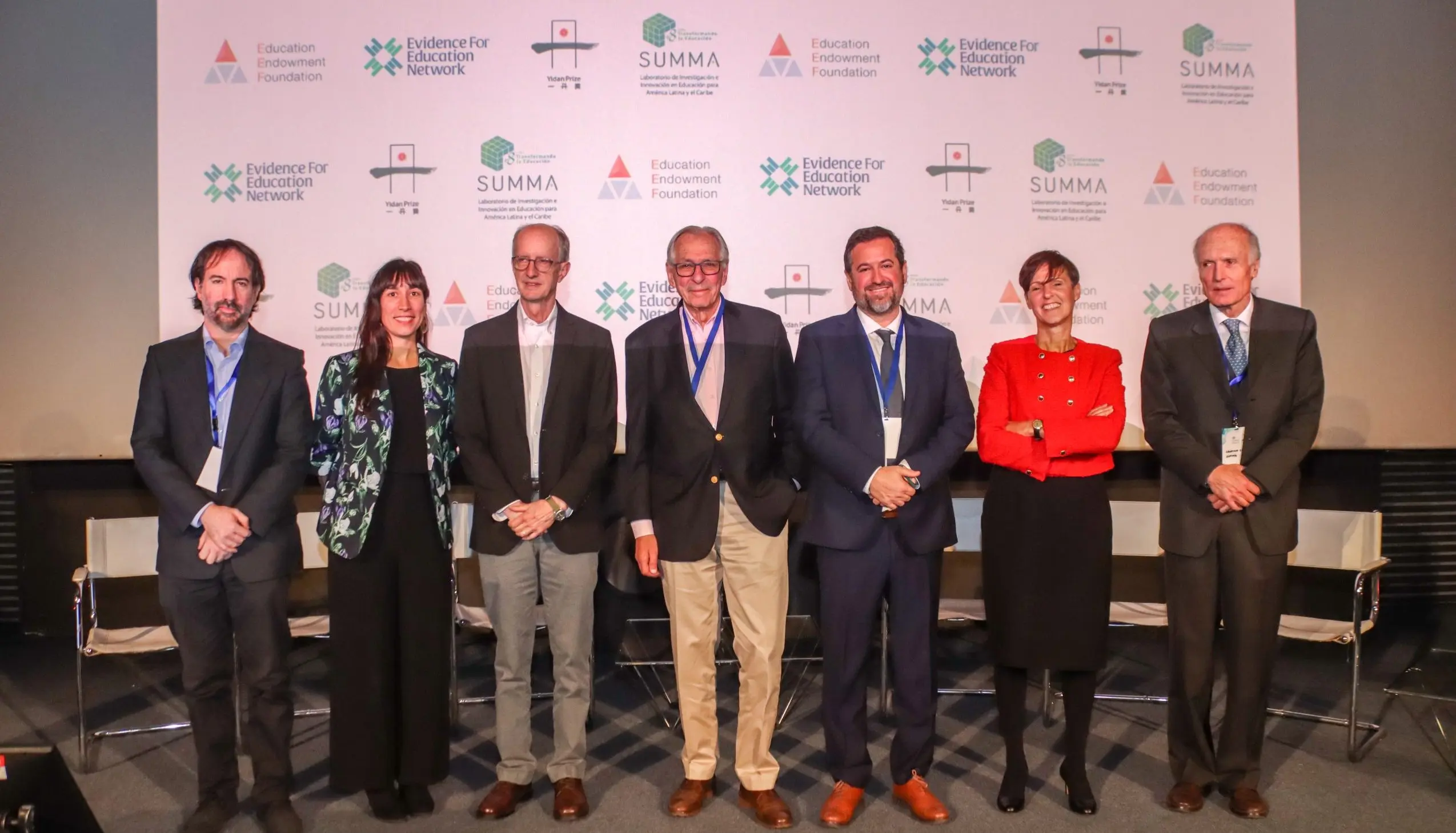
The International Conference “Evidence for Equity and Educational Transformation”, organized by SUMMA with the support of the Education Endowment Foundation (EEF) and the Evidence for Education Network (EEN), was held in Santiago de Chile on Tuesday July 23rd and Wednesday July 24th.
The conference was held at the Cineteca of the La Moneda Cultural Center, and was attended by around 300 people, including representatives and authorities from ministries of education in the region, international organizations, civil society organizations, researchers and academics, and members of the Knowledge and Innovation Exchange Centres (KIX) in Latin America and the Caribbean, Africa and Asia, as well as representatives of the partner organizations of the Evidence for Education Network (EEN).
The two days were marked by relevant reflections and discussions on how evidence can contribute to educational equity and transformation. In addition, the event coincided with the celebration of the 8th anniversary of SUMMA, created in 2016 to support Ministries of Education across the region.
First day
The first day was aimed at deepening the structural transformation for equity through the themes of equitable and intelligent financing; and pedagogies that are effective for this transformation, always with a focus on the generation, use and mobilization of evidence, as a cross-cutting theme.
Cristian Cox, President of SUMMA; Becky Francis, chief executive officer of EEF; and Chile’s Minister of Education, Nicolás Cataldo, gave welcoming remarks.
Cox stressed that “we cannot speak of a future of well-being while millions of children do not have the right to go to school or do not have resources. Without equity, development will not be achieved.
“The social justice mission is what connects us to SUMMA, and the concept of reviewing and reflecting on the role of evidence in education to advance improvements and reduce inequality,” Becky Francis noted.
For his part, Minister Cataldo mentioned that “there is no economy or society that can progress without quality education that reaches all corners so that no one is left out. Education is the engine of our future and its financing must be a priority for the states”.
Next, Javier González, Director of SUMMA, reflected on the role of evidence in education and stressed that “inequality and quality can only be improved with evidence. In Latin America we need to generate knowledge that does not only come from experts from the global north, we need exchange, review the gray literature and increase investment”.
With the theme “Structural Transformations to Promote Equity in Education: Policy and Regulatory Challenges”, presentations were given by Martin Carnoy, Professor of Education and Economics at Stanford University and Ben Ross Schneider, Professor of Political Science at MIT. In this context, Carnoy said that “almost every country in the world can improve the academic skills of its youth, and they do so by increasing the number of years of schooling, since the more education, the greater the opportunities”. Ben Ross Schneider spoke about his new book “Routes to reform” and analyzed the educational context of various Latin American countries such as Mexico, Chile and Peru.
The first day had two dialogue panels corresponding to the two topics of financing and effective pedagogies. The first was moderated by Javier González, Director of SUMMA, and was composed of Mauricio Farías, Superintendent of Education of Chile; Monserrat Creamer, former Minister of Education of Ecuador; Becky Francis, Executive Director of the Education Endowment Foundation; Analía Jaimovich, Senior Education Specialist at the Inter-American Development Bank (IDB) and Xavier Bonal, Professor of Sociology at the Universitat Autónoma de Barcelona. During the conversation, they discussed what should be the focus when talking about educational financing and the experiences of different countries on the subject.
The panel “Effective pedagogies to strengthen quality education” was moderated by Rafael Carrasco, Deputy Director, SUMMA and included José Mauricio Pineda, Minister of Education of El Salvador; José Alberto Flores, Vice Minister of Education of Ecuador; Florencio Ceballos, Senior Program Specialist, Knowledge and Innovation Exchange (KIX) of IDRC Canada; Anna Pons, Project Manager of the Global Teaching Insights and Schools+ Network of OECD; and Isabelle Janssens, Strategic Advisor of Leerpunt. This panel reflected on practices that could help strengthen the quality of education in Latin America and the various projects that have worked in countries such as Ecuador and El Salvador.
Collaborative networks and shared agendas
During the afternoon of the first day of the Conference, a meeting was held focused on collaboration networks and shared agendas for the generation and mobilization of evidence; the identification of mechanisms to strengthen the link between evidence and educational policy/practice; and the exchange of experiences and best practices in different parts of the world.
With the presence of invited panelists and representatives of the Evidence for Education Network (EEN) and the KIX hubs in LAC, Africa and Asia, the space featured presentations by José Manuel Torres, Research Manager at OECD; Raúl Chacón, Director of KIX LAC Hub at SUMMA; and Rafer Gordon, Project Director at OECS.
In addition, a panel discussion “Shared agendas: generating and mobilizing evidence for educational transformation” was held, with Nuria Vives Font, Head of teacher professional development programs at “La Caixa” Foundation; Patrick Okwen, Team Lead, eBASE; María José Sepúlveda, Director of Evaluation at SUMMA; Victoria Kisaakye, Coordinator of KIX Africa 19 Hub; Maïmouna Sissoko Touré, Coordinator of KIX Africa 21 Hub; and José Luís Canêlhas, Manager of KIX EMAP Hub. The panel was moderated by Jonathan Kay, Head of Policy, Education Endowment Foundation (EEF)
Second day
The second day of the conference was aimed at deepening the transformations at the school level, through the approach to the recovery of learning and educational trajectories, and the experiences of schools that serve minorities and traditionally excluded groups.
Javier González, Director of SUMMA, highlighted classrooms as great pillars of education. In his opening remarks, Valtencir Mendes, UNESCO’s Chief of Education, stated that “children are not failing, it is we who are failing. We need a radical change in education and for that we must work together”. In this sense, he affirmed that “we need to do more research and generate more data, we need to understand why we are getting these results”.
This was followed by a video recorded by Andreas Schleicher, Director of the Directorate for Education and Skills at the OECD, who gave an overview of various successful experiences in education in different parts of the world.
Following this, Rafael Carrasco, Deputy Director of SUMMA, spoke about the transformation of schools in the region through practices such as collaboration, dialogue and metacognition. In his presentation, he reflected that “children in Latin America are leaving high school with the same level as seventh graders in Europe, in other words, we are 5 years behind in learning”. In this sense, he shared various initiatives that SUMMA has worked on with the aim of providing tools to help improve education at the regional level.
The keynote speakers segment opened with Rukmini Banerji, CEO of Pratham Education Foundation and 2021 Yidan Prize for Education Development Laureate, who presented the educational model for learning to read used in India and elaborated on the Teaching at the right level (TaRL) methodology: “We have developed a teaching method according to the right level. Children from 3rd grade onwards are grouped according to their current level of learning to receive training. When this is achieved, the children make rapid progress,” he shared.
In this context, Jaime Saavedra, Regional Director of Human Development for Latin America and the Caribbean of the World Bank, was also present and commented that “children are in school but they are not learning. In the same city, 21st century schools coexist with schools that seem to be from the early 20th century”.
Finally, Tracey Burns, Director of Research at the National Center for Education and the Economy (NCEE), shared several ideas on how to develop a leadership system and a culture of evidence use, including generating and communicating research, facilitating access to research, strengthening collaboration and professional networks, and developing competencies.
This was followed by a panel discussion on “Learning Recovery and Educational Trajectories”, with opening remarks by Alejandra Arratia, Chile’s Undersecretary of Education. The panel was formed by Alejandra Garcés, Chile Program Director, BHP Foundation; Pablo Araya, Executive Director, Servicio Local de Educación Pública del Pino; Stuart Mathers, Head of Evidence Mobilization, Education Endowment Foundation; Angela Molema, Team Leader, Knowledge Utilization for Primary and Secondary Education, National Organization for Educational Research, The Netherlands; and Karina Stocovaz, Director, Instituto Natura América Hispana. The space was moderated by Dante Castillo, Director of Policy and Innovative Practices of SUMMA, and experiences were shared on how to put into action the evidence and lessons learned during this process.
The second panel addressed “experiences at the frontier: the challenges of equity to address learning in minorities and excluded groups”, and was confirmed by Valtencir Mendes, Chief of Education at UNESCO; Francisca Morales, Education Officer at UNICEF; Taline Sabella, Head of Research and Policy Advocacy at Queen Rania Foundation; Nain Yuh MIrabel, Head of Gender Equality and Inclusion Programs at eBASE Africa; Rocío Faúndez, National Director of the National Youth Social Reinsertion Service. The panel was moderated by Karla Fernandini, Director of Strategic Development and Advocacy of SUMMA, and discussed the experiences and challenges to be faced in education in terms of equity.
Training workshops
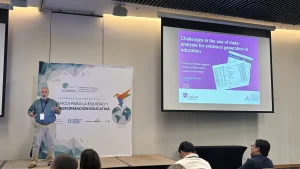
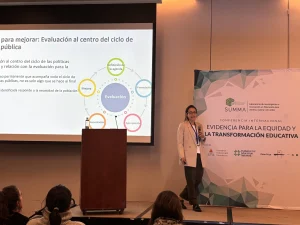
During the afternoon, the workshop session began with a presentation by Randa Grob-Zakhary, CEO and Founder of Education.org. Next, Steven Higgins, Professor of Education at Durham University, gave the workshop “Challenges in the use of meta-analysis for the generation of evidence in education”, and María José Sepúlveda, Director of Evaluation at SUMMA, gave the second workshop “Evaluating for improvement: Theory of change, impact evaluation and scalability”.
The international conference “Evidence for Equity and Educational Transformation” was an event of global relevance that served to reflect and exchange on the generation and use of evidence in education, and also to promote action and new instances of collaboration to advance towards the transformation of education systems in Latin America and the Caribbean.
Francesca Bonomelli Carrasco is a Senior Researcher at SUMMA, with a background in project management, public policies, and applied research. She is interested in equity and justice which is reflected in her work and research on education, employment, inequality, migration, and gender issues.
Her previous work experience includes coordinating an educational transformation project in Paraguay, her work as a consultant for UNESCO and the ILO, and her key roles in the Ministry of Education of Chile. Currently, at SUMMA, she focuses on supporting the development of educational policies and connecting research, practice, and educational policy.
She got a master’s degree in international development studies from the University of Amsterdam, she obtained a master’s degree in labor economics for Development from the University of Turin, and her bachelor’s degree in Economics from the University of Chile. All of which provide her with skills, technical tools, and diverse perspectives to contribute to the important work that SUMMA is pushing forward.
Paula Salas
Evaluation Project Coordinator
About Paula Salas
Paula Salas is Coordinator of Evaluation Projects at SUMMA. Her main experience is in educational research and development of assessment instruments. She worked as an analyst at the Measurement Center of the Catholic University (MIDE UC) and for four years at the Department of Psychology of the University of Chile in various research projects, aimed at the development of psychoeducational assessment instruments to support high school students. High School Humanist Scientist and Professional Technician in the process of transition to higher education.
She is a psychologist from the University of Chile and has a master’s degree in Social Research Methods from University College London (UCL).


 For his part, Minister Cataldo mentioned that “there is no economy or society that can progress without quality education that reaches all corners so that no one is left out. Education is the engine of our future and its financing must be a priority for the states”.
 Next, Javier González, Director of SUMMA, reflected on the role of evidence in education and stressed that “inequality and quality can only be improved with evidence. In Latin America we need to generate knowledge that does not only come from experts from the global north, we need exchange, review the gray literature and increase investment”.
  The first day had two dialogue panels corresponding to the two topics of financing and effective pedagogies. The first was moderated by Javier González, Director of SUMMA, and was composed of Mauricio Farías, Superintendent of Education of Chile; Monserrat Creamer, former Minister of Education of Ecuador; Becky Francis, Executive Director of the Education Endowment Foundation; Analía Jaimovich, Senior Education Specialist at the Inter-American Development Bank (IDB) and Xavier Bonal, Professor of Sociology at the Universitat Autónoma de Barcelona. During the conversation, they discussed what should be the focus when talking about educational financing and the experiences of different countries on the subject.
  With the presence of invited panelists and representatives of the Evidence for Education Network (EEN) and the KIX hubs in LAC, Africa and Asia, the space featured presentations by José Manuel Torres, Research Manager at OECD; Raúl Chacón, Director of KIX LAC Hub at SUMMA; and Rafer Gordon, Project Director at OECS.
 In addition, a panel discussion “Shared agendas: generating and mobilizing evidence for educational transformation” was held, with Nuria Vives Font, Head of teacher professional development programs at “La Caixa” Foundation; Patrick Okwen, Team Lead, eBASE; María José Sepúlveda, Director of Evaluation at SUMMA; Victoria Kisaakye, Coordinator of KIX Africa 19 Hub; Maïmouna Sissoko Touré, Coordinator of KIX Africa 21 Hub; and José Luís Canêlhas, Manager of KIX EMAP Hub. The panel was moderated by Jonathan Kay, Head of Policy, Education Endowment Foundation (EEF)
  Following this, Rafael Carrasco, Deputy Director of SUMMA, spoke about the transformation of schools in the region through practices such as collaboration, dialogue and metacognition. In his presentation, he reflected that “children in Latin America are leaving high school with the same level as seventh graders in Europe, in other words, we are 5 years behind in learning”. In this sense, he shared various initiatives that SUMMA has worked on with the aim of providing tools to help improve education at the regional level.
  The keynote speakers segment opened with Rukmini Banerji, CEO of Pratham Education Foundation and 2021 Yidan Prize for Education Development Laureate, who presented the educational model for learning to read used in India and elaborated on the Teaching at the right level (TaRL) methodology: “We have developed a teaching method according to the right level. Children from 3rd grade onwards are grouped according to their current level of learning to receive training. When this is achieved, the children make rapid progress,” he shared.
 This was followed by a panel discussion on “Learning Recovery and Educational Trajectories”, with opening remarks by Alejandra Arratia, Chile’s Undersecretary of Education. The panel was formed by Alejandra Garcés, Chile Program Director, BHP Foundation; Pablo Araya, Executive Director, Servicio Local de Educación Pública del Pino; Stuart Mathers, Head of Evidence Mobilization, Education Endowment Foundation; Angela Molema, Team Leader, Knowledge Utilization for Primary and Secondary Education, National Organization for Educational Research, The Netherlands; and Karina Stocovaz, Director, Instituto Natura América Hispana. The space was moderated by Dante Castillo, Director of Policy and Innovative Practices of SUMMA, and experiences were shared on how to put into action the evidence and lessons learned during this process.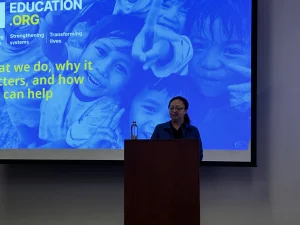
 The international conference “Evidence for Equity and Educational Transformation” was an event of global relevance that served to reflect and exchange on the generation and use of evidence in education, and also to promote action and new instances of collaboration to advance towards the transformation of education systems in Latin America and the Caribbean.