BACK TO ALL NEWS
The KIX LAC and ETI initiatives bring together evidence, capacity, and collaborative learning to strengthen teacher training
July 2nd, 2026.
2 de July de 2026
KIX, News
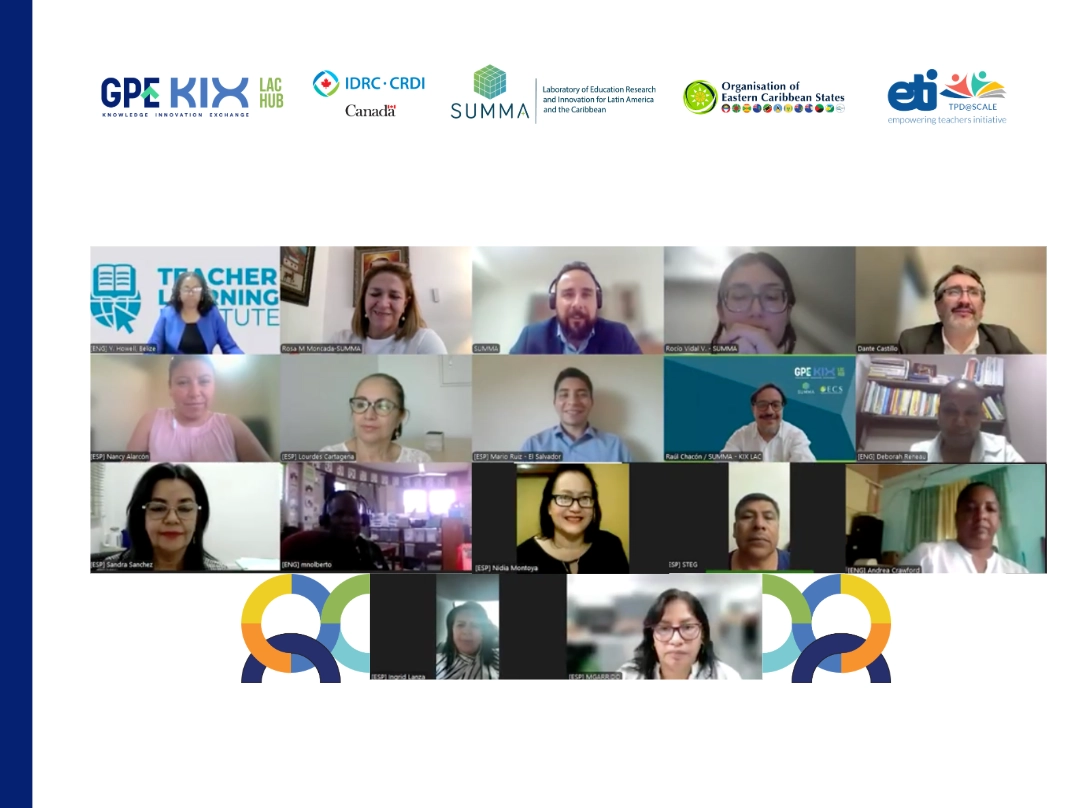
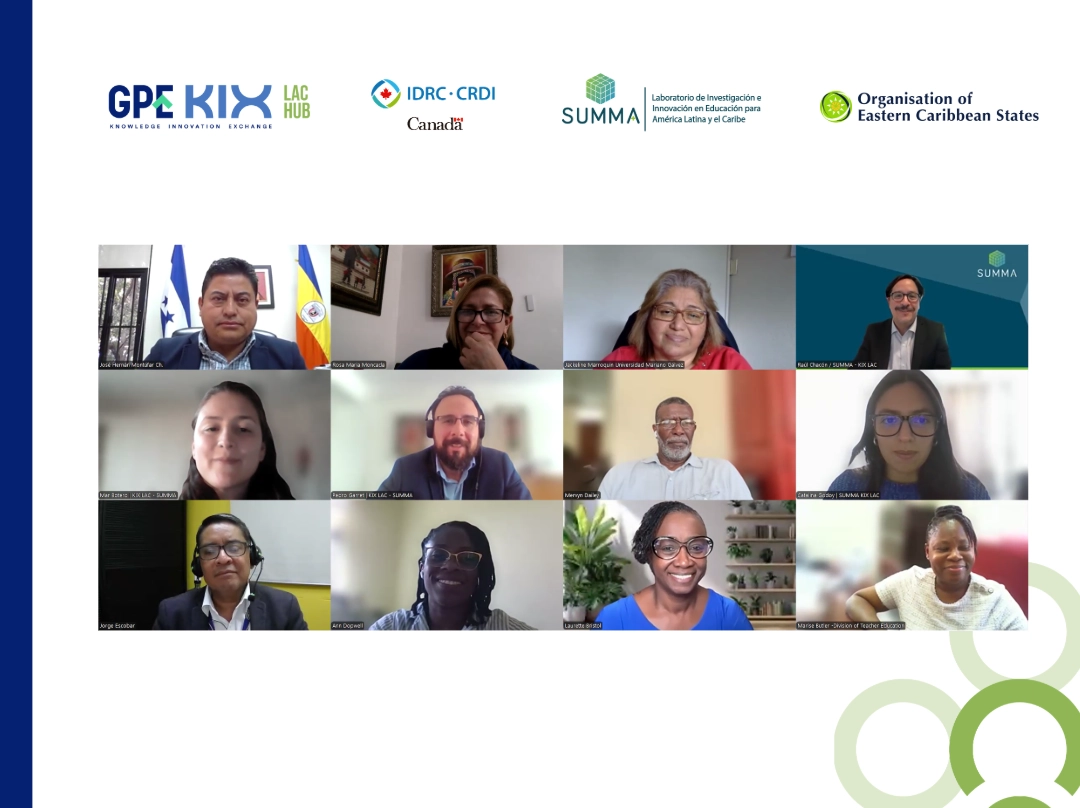
The KIX LAC Hub, an initiative promoted by the Global Partnership for Education (GPE) and Canada’s International Development Research Centre (IDRC), led in Latin America and the Caribbean by SUMMA and the Organization of Eastern Caribbean States (OECS), together with the Empowering Teachers Initiative (ETI), led by SUMMA and the Foundation for Information Technology Education and Development (FIT-ED), within the framework of the TPD@Scale for the Global South and with the support of IDRC, launched the regional workshop “Teacher Professional Development at Scale: Strengthening National and Regional Initiatives Through a Teacher Empowerment Approach.”
This collaboration is part of SUMMA’s ongoing work on teacher strengthening, an area that has been addressed through initiatives such as KIX LAC and ETI, which aim to mobilize evidence, promote innovation, and support improvements in educational policies and practices. In this context, KIX LAC contributes its expertise in knowledge mobilization, capacity building, and cross-country learning, while ETI provides conceptual and methodological resources developed to advance toward more equitable, effective, and sustainable teacher professional development systems at scale. The collaboration between these two initiatives aims to help countries in the region analyze their own experiences with teacher training, identify strengths and challenges, and move toward models that better respond to the diversity of contexts, career paths, and needs of the teaching workforce.
Pedro Garret, project coordinator and researcher at KIX LAC, welcomed the participants and highlighted that this workshop is part of the Knowledge Mobilization Series on the use of evidence in teacher policies and practices. In this context, he emphasized the importance of creating spaces where evidence is not only shared but also discussed and used to guide concrete decisions.
For his part, Dante Castillo, director of Innovative Policies and Practices at SUMMA and ETI lead for Latin America and the Caribbean, presented the region’s main challenges regarding teacher training and professional development. From the ETI-TPD@Scale perspective, he emphasized that scaling up this process involves analyzing not only the quality of content and methodologies but also the conditions that enable relevant outreach to teachers in different contexts. In this context, the workshop aims to provide tools for countries to review their teacher training initiatives and identify opportunities for improvement related to access, relevance, sustainability, appropriate technologies, and pedagogical support.
She also highlighted the value of the regional exchange promoted by this event, noting that “this workshop could be a valuable contribution and an interesting collaboration for KIX LAC and the countries in the region, as it allows us to examine our professional development systems, identify their strengths and weaknesses, and use some concepts of teacher professional development at scale as a way to assess our systems and consider how to move forward.”
One of the central elements of the event was the exchange of ideas among countries, which made it possible to identify common challenges related to teacher support, access to quality opportunities, and the design of more relevant training processes that recognize the active role of teachers.
From El Salvador, Mario Ruiz, Director of Teacher Training at the Ministry of Education, presented the training strategy associated with the new early childhood curriculum, which has a national scope and a strong component of teacher support and mentoring. He also highlighted the development of brief materials and pedagogical guidelines designed to support daily classroom practice.
Lourdes Cartagena, from the General Directorate of Professional Development at the Honduran Ministry of Education, shared progress in using evidence to guide the design of training programs and implementation strategies. In particular, she highlighted the importance of identifying teachers’ actual training needs and strengthening programs focused on methodologies, soft skills, technological competencies, leadership, and support for novice teachers.
Yvonne Howell, Senior Education Officer at the Teacher Training Institute of the Ministry of Education, Culture, Science, and Technology of Belize, presented her experience with the Teacher Learning Institute, a Moodle platform designed to expand opportunities for teacher professional development throughout the year and offer greater flexibility to educators. She also highlighted the shift from isolated training activities toward more structured, process-oriented programs linked to classroom practice.
For her part, Nancy Alarcón, Deputy Director of Educational Human Resources Training at the Guatemalan Ministry of Education, shared the experience of the Academic Program for Teacher Professional Development (PADEP/D), a policy that has been in place for more than 17 years and has contributed to the professionalization of thousands of in-service teachers. Progress was also presented on webinars, online courses, and initiatives to strengthen initial teacher education.
The session also provided an opportunity to present two open educational resources developed within the framework of the TPD@Scale approach: a self-paced online course on scaling teacher professional development, aimed at strengthening the capacities of decision-makers and technical stakeholders involved in teacher policies; and an analytical framework for strengthening teacher professional development systems with ICT, a tool that enables the analysis of teacher professional development initiatives based on multiple dimensions critical to their scaling.
The process will continue with two new sessions, scheduled for September and November 2026. During these sessions, teams from the KIX LAC countries will work on analyzing specific teacher professional development initiatives using the ETI-TPD@Scale approach. The goal is for each delegation to produce an analytical report that identifies strengths, challenges, and opportunities for improvement in teacher professional development policies or programs currently designed and/or implemented in their countries.
More than just a one-time event, this workshop reflects the purpose of GPE KIX’s work: to build capacity, promote the use of evidence in decision-making, share experiences across countries, and contribute to scaling up innovations relevant to education systems through regional collaboration. In coordination with ETI, this initiative provides countries with tools, evidence, and insights on teacher professional development at scale, in response to regional priorities and with a focus on more inclusive, effective, and sustainable policies and practices.
Related content


Strategic partners