BACK TO ALL NEWS
“Ed-Tech landscape and challenges in Latin America and the Caribbean”, a study published by Southern Voice in collaboration with GRADE, whose authorship is led by SUMMA
February 1st, 2024.
1 de February de 2024
News
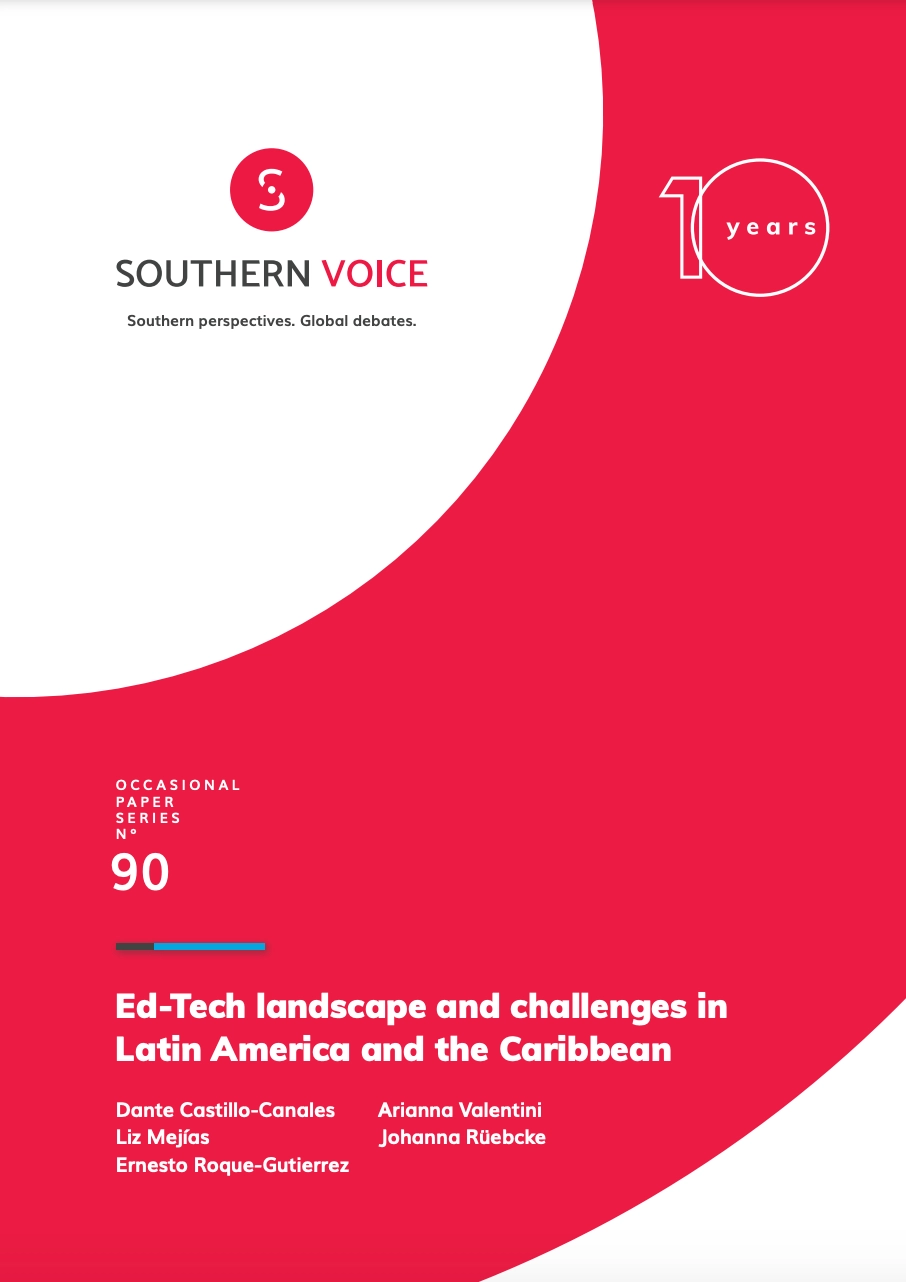
Southern Voice in collaboration with the Group for Analysis for Development (GRADE) published a new report “Ed-Tech landscape and challenges in Latin America and the Caribbean”, whose authorship is led by SUMMA’s Director of Innovative Policies and Practices, Dante Castillo-Canales.
The study explores the design and implementation of educational technology (Ed-tech) programs and policies in Latin America and the Caribbean.
The COVID-19 pandemic brought particular educational challenges in Latin America and the Caribbean (LAC), where improvements in learning outcomes were already stagnant. The move to remote and online solutions during the pandemic exacerbated inequalities, despite mitigation efforts put in place. This study explores the design and implementation of education technology (Ed-tech) programmes and policies in LAC to understand to what extent and how technology fosters learning, and reduces inequalities, in primary and secondary education in the region, using an issue-specific political economy framework.
The study finds that although there is significant regional variation in progress on the digitalisation of education, Ed-tech interventions have gradually transitioned from the provision of digital learning devices and internet access, towards enhancing digital literacy among teachers and students. It also finds that the integration of technology in education demands a pedagogical shift towards more personalised learning, targeting the specific needs of students and teachers Relatedly, efforts to combat educational inequalities must also take into account excluded groups, particularly along lines of gender and disability. While opinion varies in terms of how to best support a sustainable Ed-tech environment, the issue of governance is central. The presence of multiple stakeholders requires an effective governance system to ensure the efficient use of resources, prevent overlapping functions, and to ensure policy continuity.
Access to the report
Related content



Strategic partners