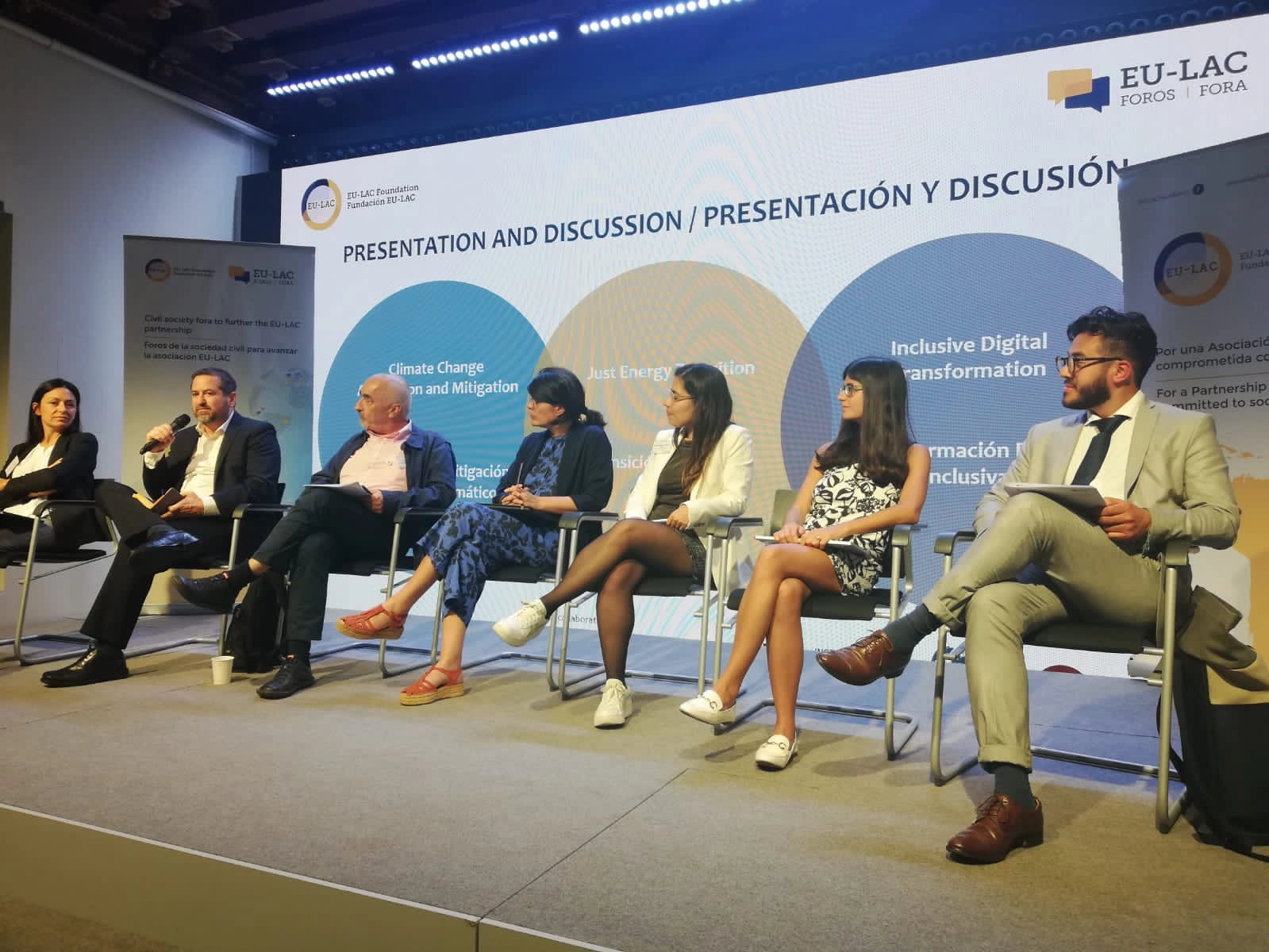
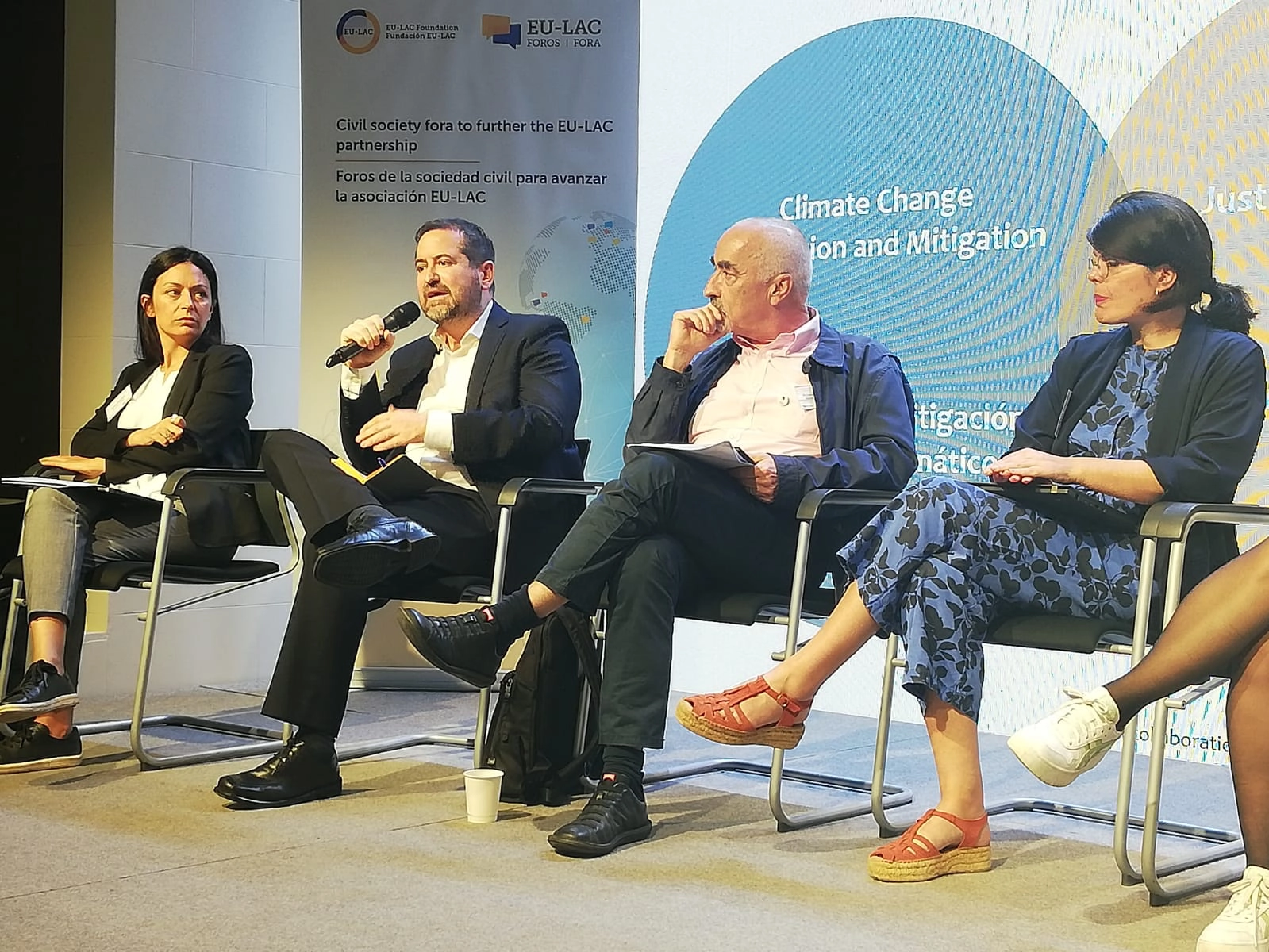
The director of SUMMA at the EU-LAC Just Transitions Forum: “We must focus on digitizing to include”
May 16th, 2023.
16 de May de 2023
News
Share
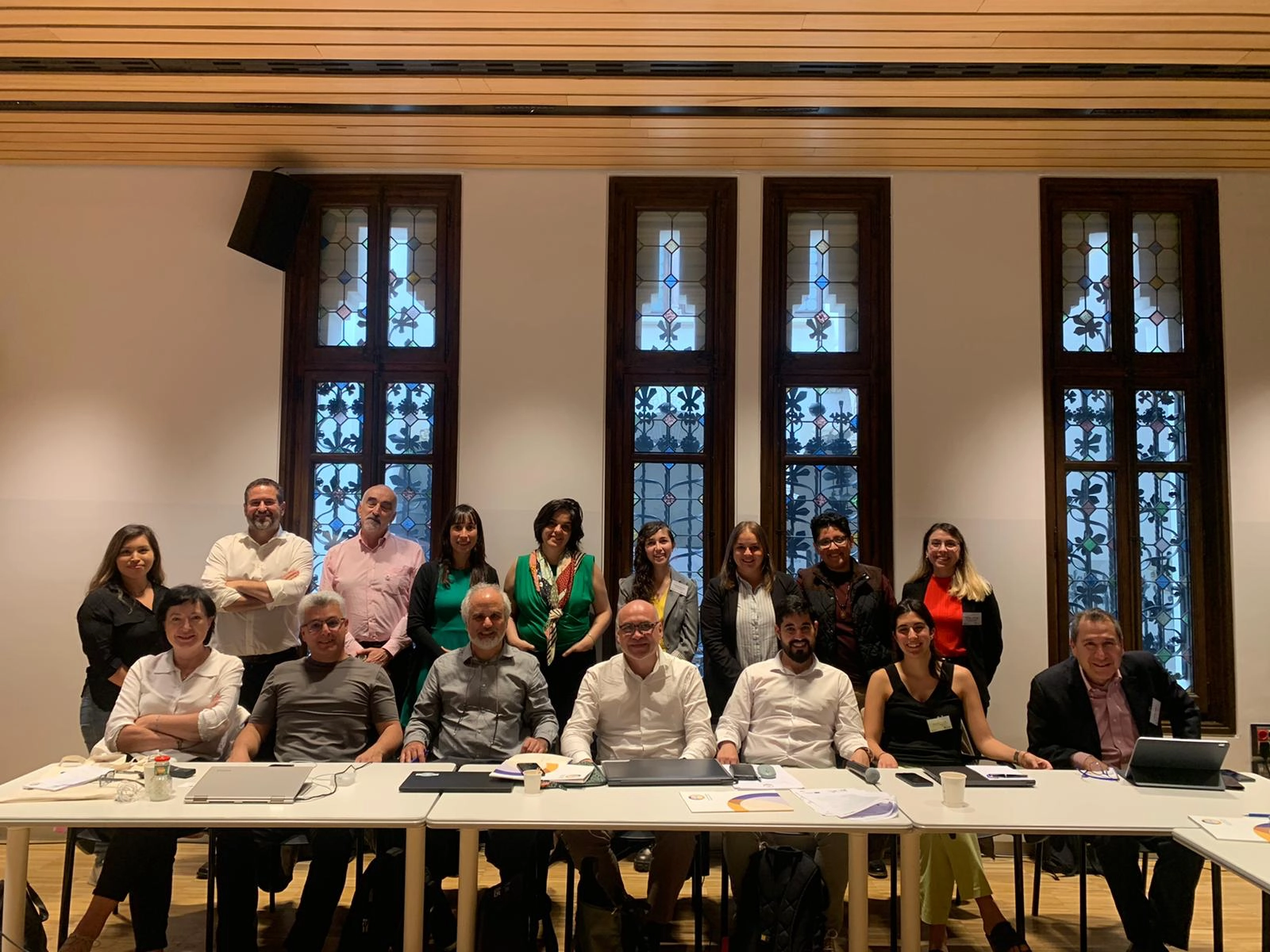
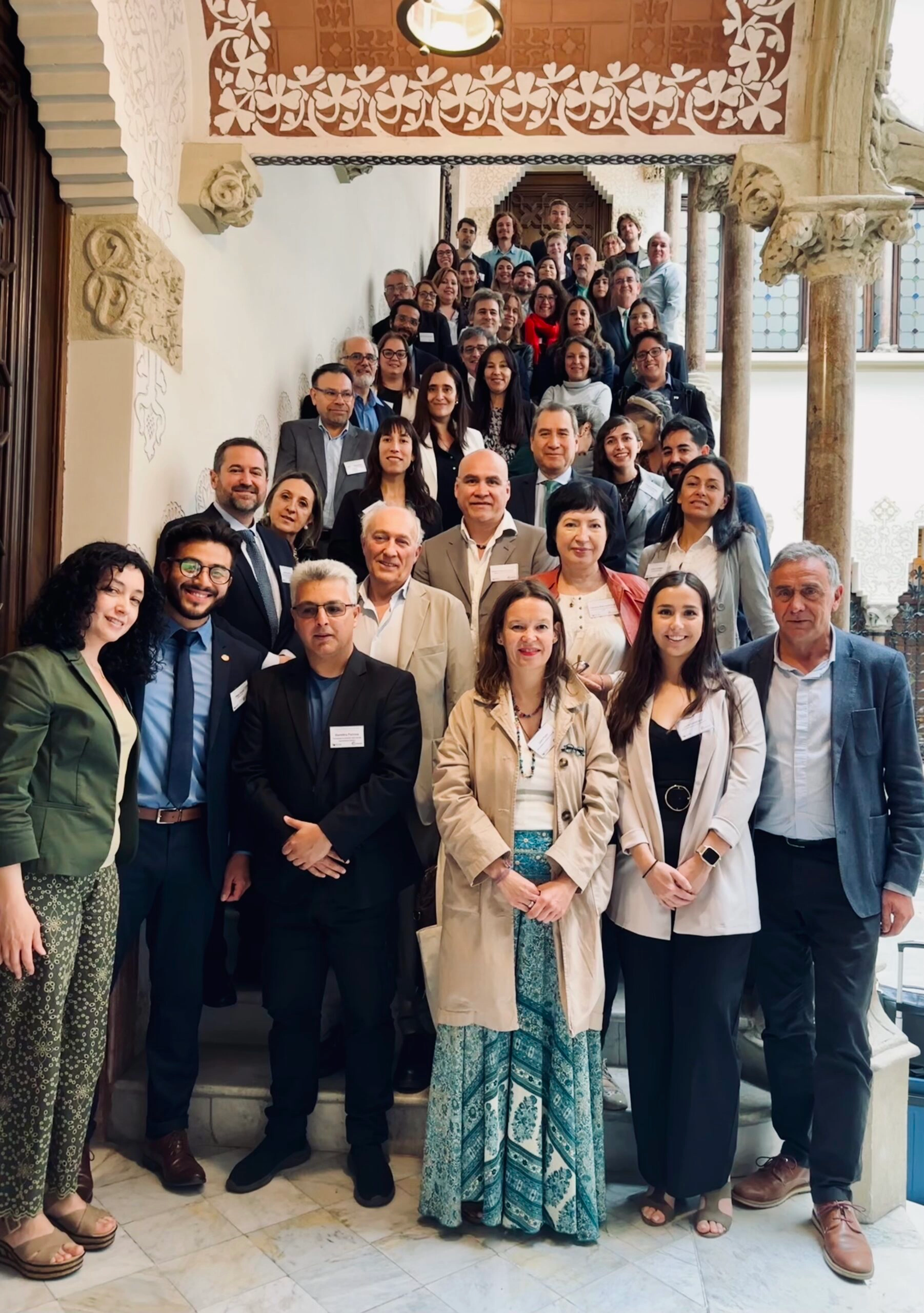
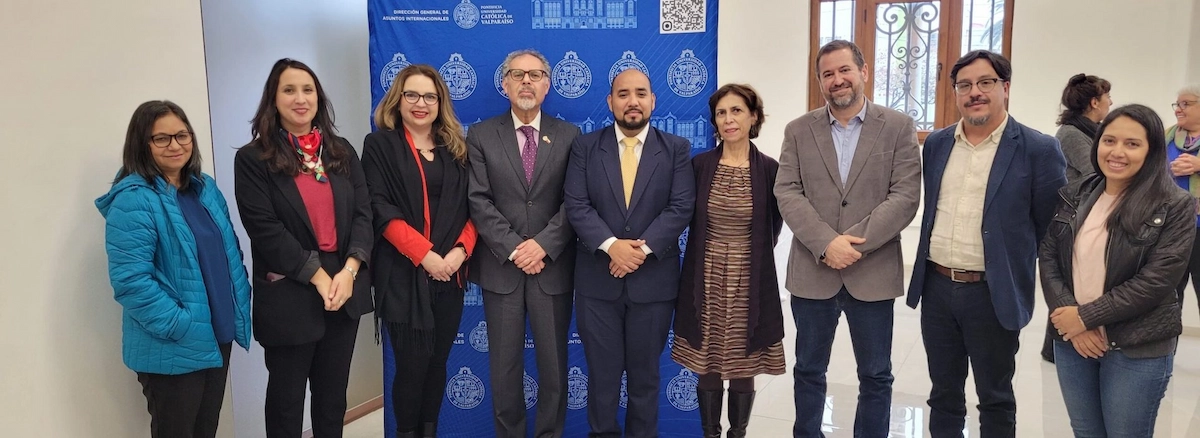
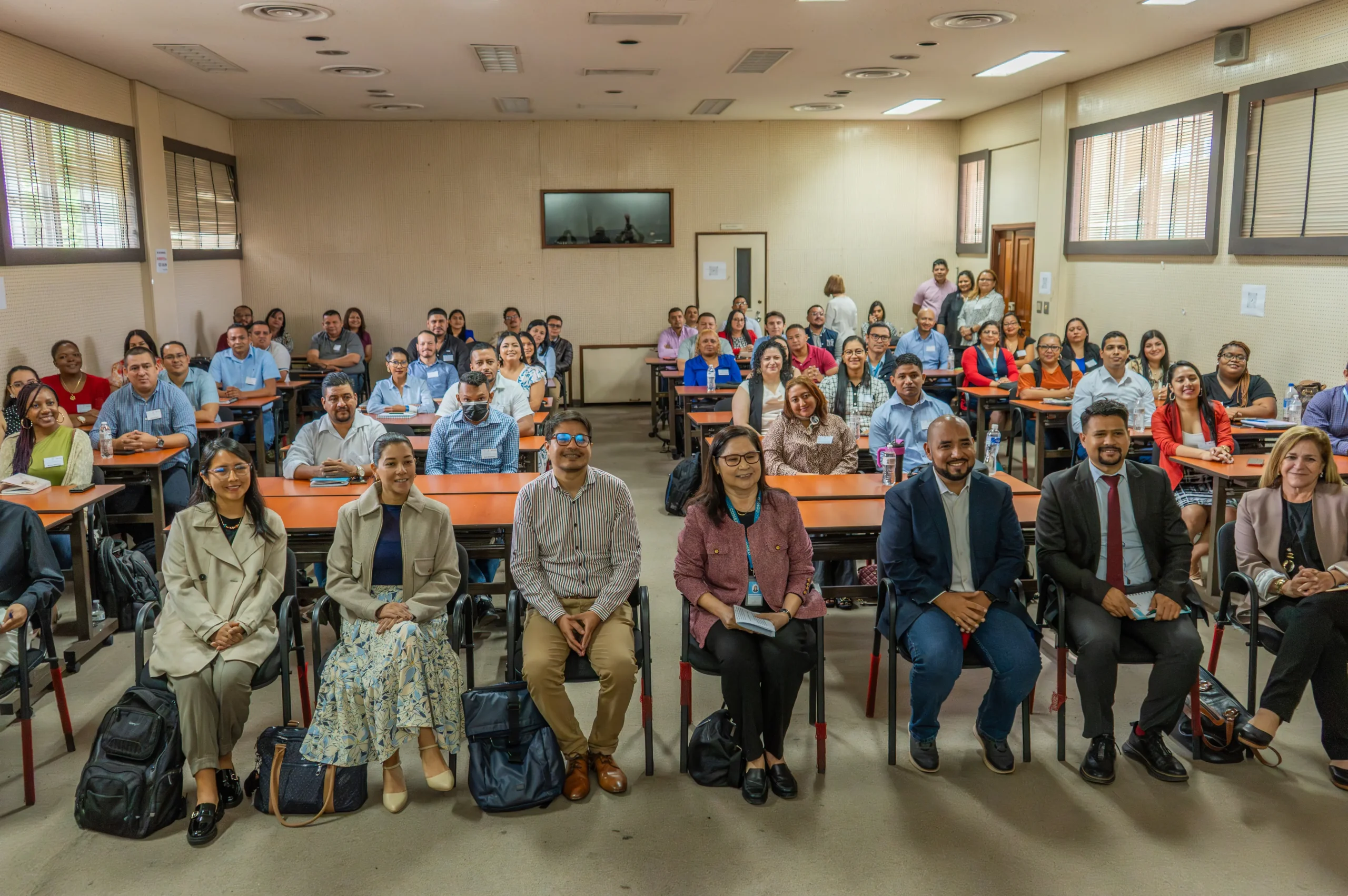
Within the framework of its mission to facilitate the exchange between government and civil society actors from the two regions, the EU-LAC Foundation organized the Just Transitions Forum, which took place in Barcelona, and SUMMA was present with its director , Javier González, and the Director of Strategic Development and Advocacy, Karla Fernandini.
Javier participated in the session on “Digital Divide and the deepening of learning and productivity gaps in LAC and the EU”, which took place in the Thematic Group on Inclusive Digital Transformation. In addition, he was part of the closing panel in which each thematic group presented their conclusions.
“We agree that before the pandemic, our systems in the region were already weak in terms of quality, equity, and inclusion, and post-pandemic these dimensions worsened,” he began. “The response of governments in general has been humble or inadequate for the level of challenges. They have responded late with limited resources and limited capacities,” he warned.
Reviewing what was his presentation on the first day, Javier recalled that the regional study “La Voz Docente”, carried out by SUMMA and OECS together with the Ministries of Education of the 21 countries that participated, showed that around 81% of teachers perceived that there was training for online education in the pandemic, but 46% said that this training was insufficient.
In another line of topics, he added that there is a need for research. “In the Global South we produce very little research while most of the research, even on Latin America, is done from the Global North,” he reflected.
Regarding the recovery of learning, he maintained that “there are countries that work on the recovery of learning, some make use of technological platforms, and others, the most daring, more personalized, self-guided programs, such as the case of Uruguay and other countries”. “We must encourage areas of collaboration, see the infrastructure, not only investing but helping to negotiate the entry of large companies, making Internet available in rural areas,” he warned. He insisted that “inclusion is key. Latin America is unequal in multiple dimensions and digitizing must be an important focus to include with a research and development ecosystem perspective. We must resolve coordination failures, generate capacities and the way is a focus of systems nationals”. “We have to know how to use new technologies and Artificial Intelligence and how it is introduced into the pedagogical core,” he concluded.
The Forum has the objective of generating a space for debate and reflection of experts, researchers and other civil society actors on the challenges and opportunities of bi-regional cooperation in terms of: adaptation and mitigation of climate change, energy transition fair and inclusive digital transformation, in order to formulate recommendations that will be presented to public policy decision makers who will participate in the next CELAC-EU Summit of Heads of State and Government.
The EU-LAC Foundation was created by the Heads of State and Government of the European Union (EU) and the Community of Latin American and Caribbean States (CELAC) in 2010. Its members are the EU and CELAC countries and the Foundation itself. EU. The Foundation is a tool of the EU-CELAC association and its activities foster intergovernmental dialogue, in line with the bi-regional Action Plan.
La Fundación tiene la misión de fortalecer y promover la asociación estratégica birregional, mejorando su visibilidad y fomentando la participación activa de las sociedades civiles respectivas.
Francesca Bonomelli Carrasco is a Senior Researcher at SUMMA, with a background in project management, public policies, and applied research. She is interested in equity and justice which is reflected in her work and research on education, employment, inequality, migration, and gender issues.
Her previous work experience includes coordinating an educational transformation project in Paraguay, her work as a consultant for UNESCO and the ILO, and her key roles in the Ministry of Education of Chile. Currently, at SUMMA, she focuses on supporting the development of educational policies and connecting research, practice, and educational policy.
She got a master’s degree in international development studies from the University of Amsterdam, she obtained a master’s degree in labor economics for Development from the University of Turin, and her bachelor’s degree in Economics from the University of Chile. All of which provide her with skills, technical tools, and diverse perspectives to contribute to the important work that SUMMA is pushing forward.
Paula Salas
Evaluation Project Coordinator
About Paula Salas
Paula Salas is Coordinator of Evaluation Projects at SUMMA. Her main experience is in educational research and development of assessment instruments. She worked as an analyst at the Measurement Center of the Catholic University (MIDE UC) and for four years at the Department of Psychology of the University of Chile in various research projects, aimed at the development of psychoeducational assessment instruments to support high school students. High School Humanist Scientist and Professional Technician in the process of transition to higher education.
She is a psychologist from the University of Chile and has a master’s degree in Social Research Methods from University College London (UCL).