Guatemala and Colombia, together with the KIX LAC Hub, advance collaboration to strengthen educational management and innovation models
November 28th, 2025.
28 de November de 2025
KIX
Share
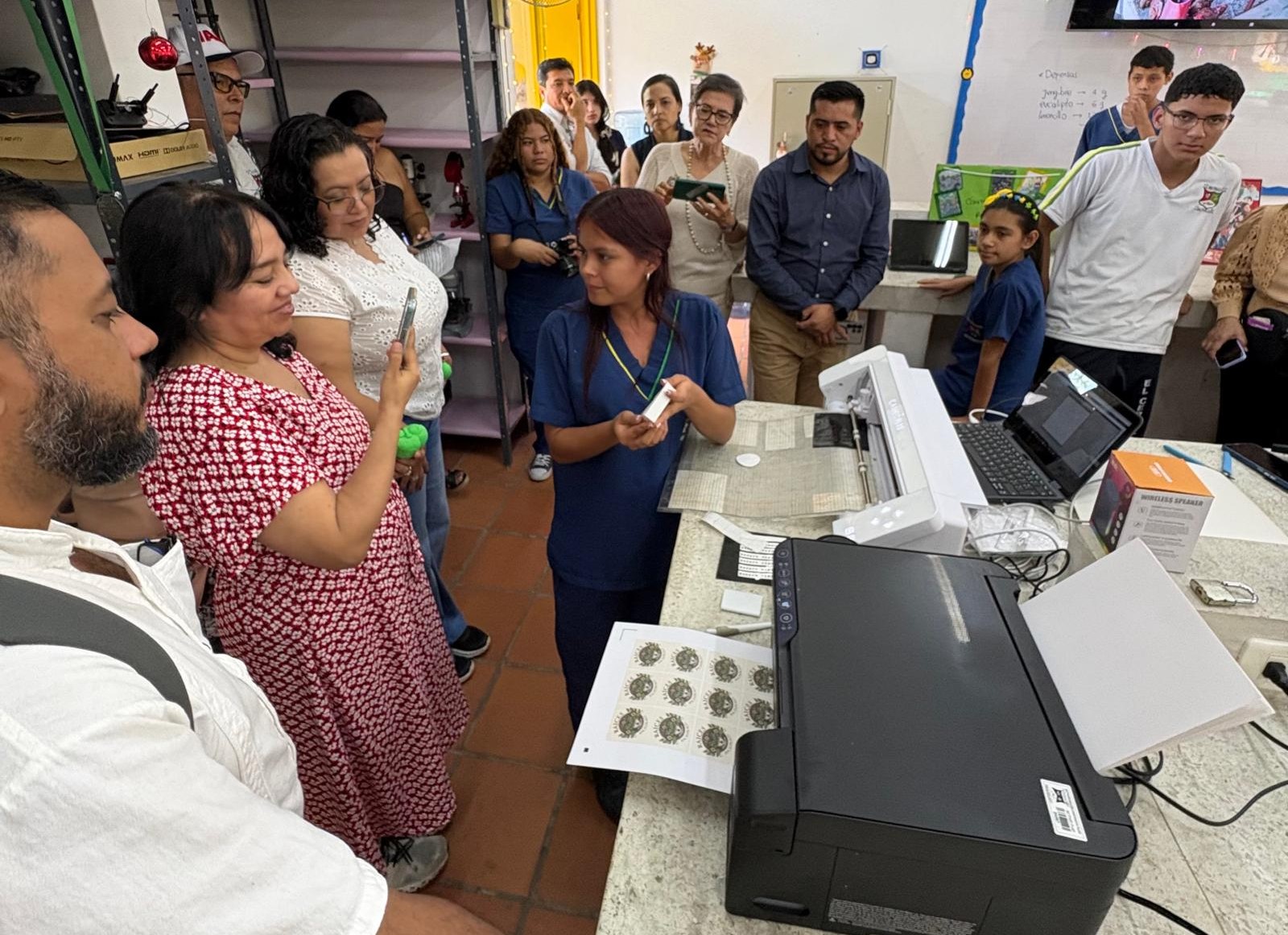
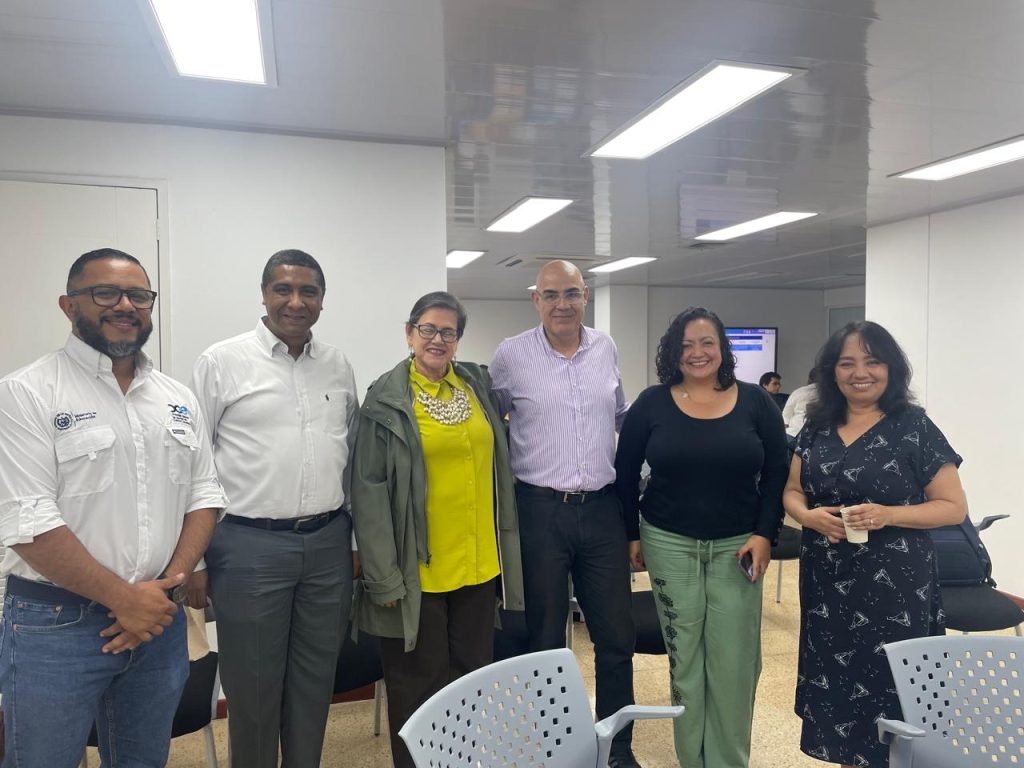
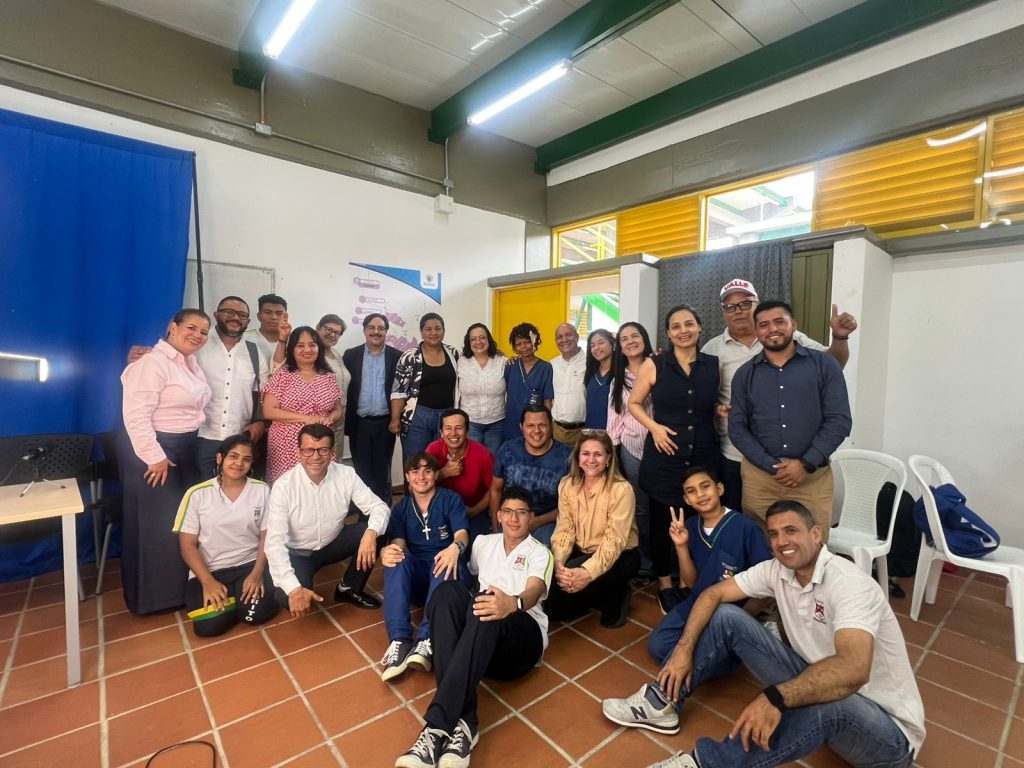
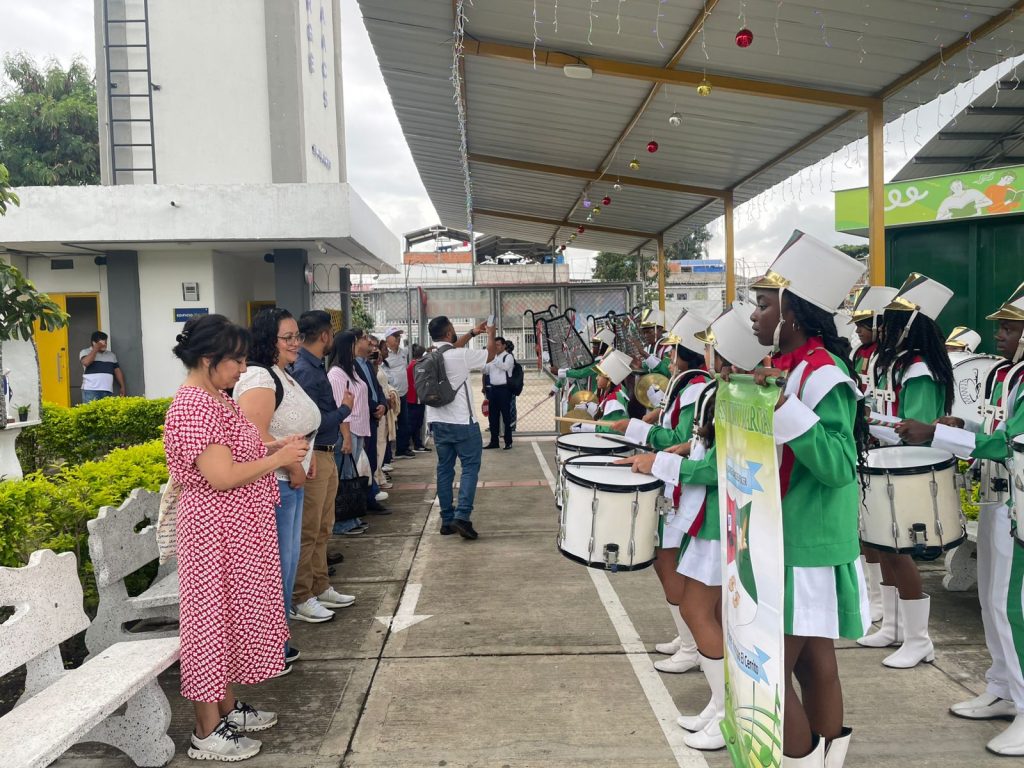
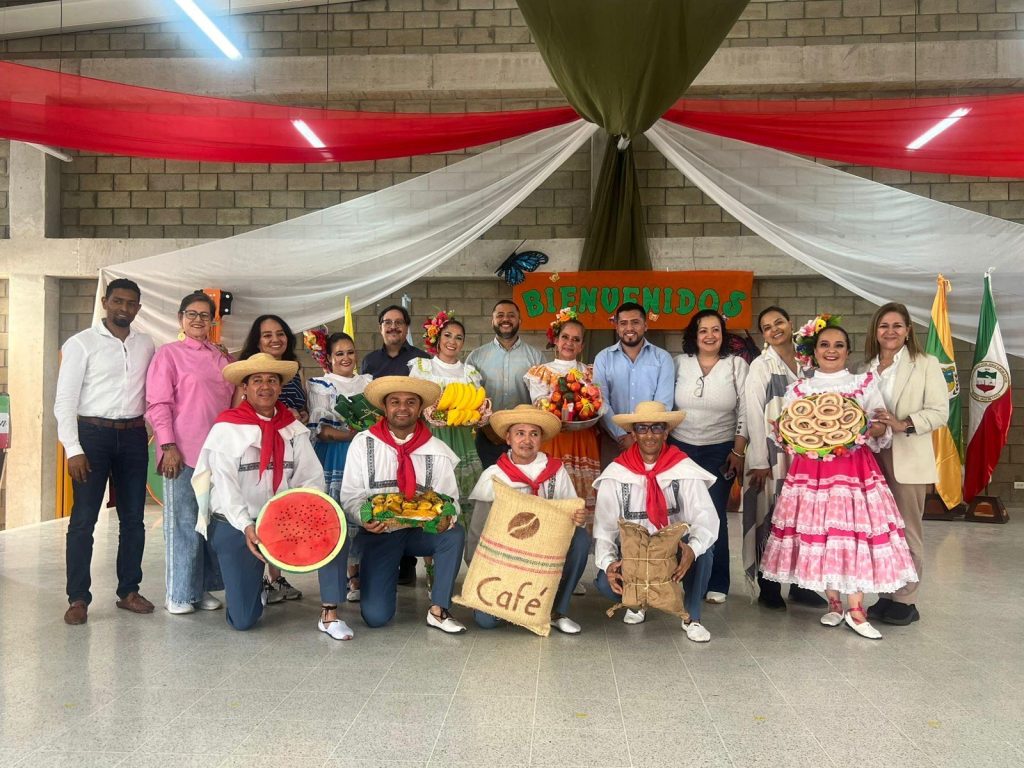
Guatemalan delegation during the visit to the Jorge Isaac El Placer Educational Institution, together with the Education Secretariat of Valle del Cauca.
A delegation from the Ministry of Education of Guatemala traveled to Valle del Cauca, Colombia, as part of a technical learning visit to gain deeper insight into the ValleLabs educational innovation model and explore its possible adaptation to the Guatemalan context. The visit was organized jointly by MINEDUC Guatemala and SUMMA, through the KIX LAC Hub, with the support of the Global Partnership for Education (GPE) and the International Development Research Centre (IDRC). This collaborative effort sought to strengthen cross-country learning and promote the exchange of experiences regarding educational management models and pedagogical innovation.
The interest of the Ministry of Education of Guatemala is linked to its national initiative, MiLab, which seeks to promote educational innovation laboratories with a STEAM approach to develop 21st-century skills and respond to challenges such as climate change, lifelong learning, and sustainable development. In this process, the ValleLabs experience, which combines participatory governance, specialized infrastructure, and project-based methodologies, offers key elements to advance the design, implementation, and scalability of MiLab.
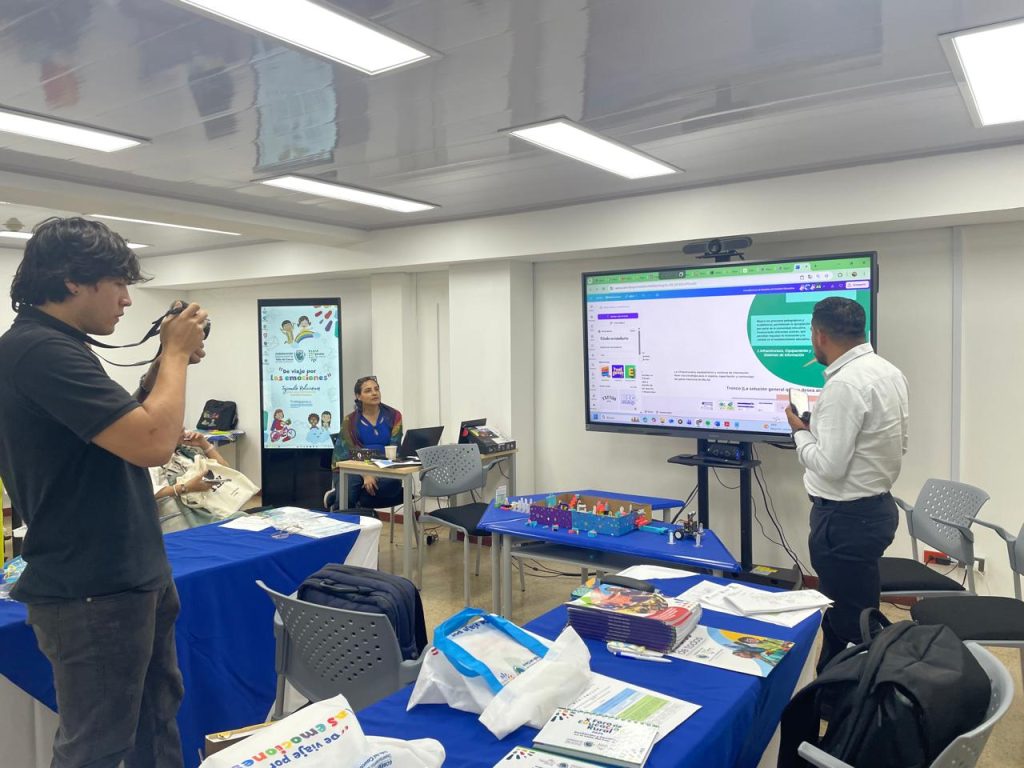
Work of the Guatemalan delegation together with the Education Secretariat of Valle del Cauca.
The visit also addressed specific questions from MINEDUC regarding the technical, pedagogical, and governance requirements necessary to adapt the model to their reality. The team explored pathways for the development of an information system, teacher training, the installation of innovation laboratories in rural areas, and the subsequent scalability of the model.
Between November 10 and 12, the delegation held conversations with technical teams from the Education Secretariat of Valle del Cauca, visited educational institutions implementing the strategy, and toured spaces such as Lab Centers, Lab Points, and Lab Sparks to observe closely how innovation is articulated with territorial relevance.
Participating from Guatemala were Claudia Morales, Director General of Educational Quality Management; Edsson González, from the Digital Transformation team; Franck Hernández, specialist in technological training; and Rosangela Mérida, advisor to the Technical Vice Ministry of Education. Joining from the KIX LAC Hub were Raúl Chacón, its director, and Rosa María Moncada, KIX Country Support Officer. The host group was composed of members of the Sub-secretariat of Educational Quality of Valle del Cauca, led by Ana Milena Ortiz, and the entire technical and logistical support team, including Sara Diana Urbano, Andrea Serna, Fernando Forero, Consuelo Montoya, Ruth Zarate, Ferney Palta Velasco, and the entire team accompanying the Lab Center, which has the Ave Fénix Foundation as its operating institution, headed by Mary Luz Torres.
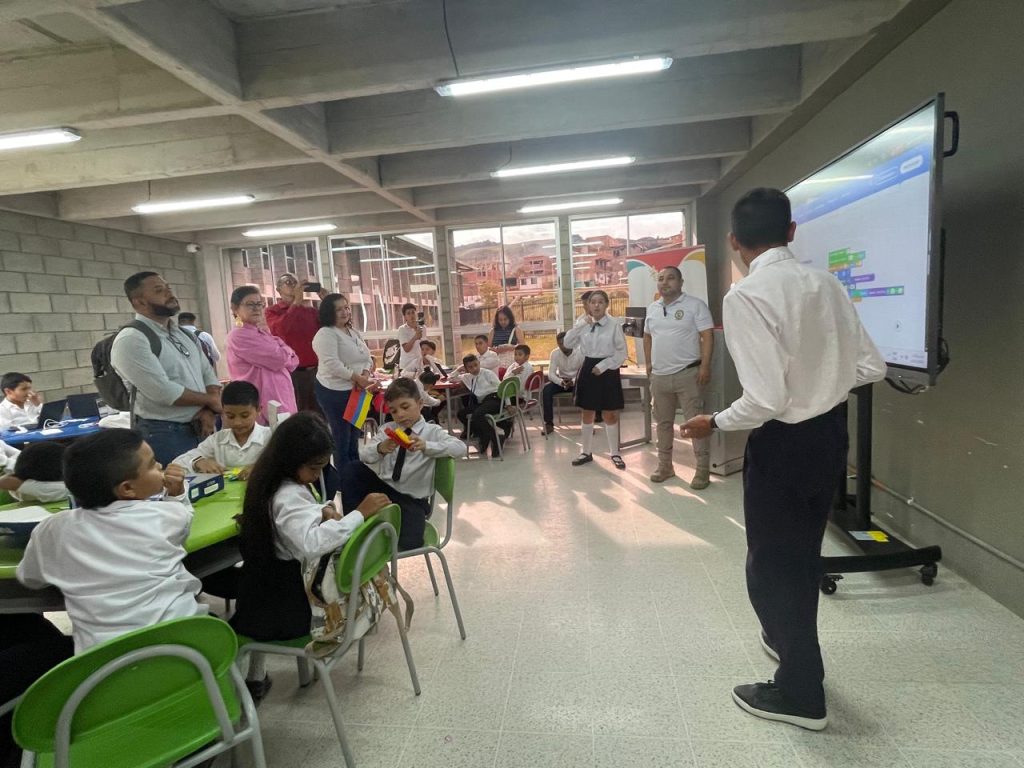
The visits to the La Libertad de La Cumbre, Jorge Eliecer Gaitán de Restrepo, and Jorge Isaacs El Placer institutions allowed for the observation of innovative pedagogical experiences, active STEAM classrooms, productive projects linked to the curriculum, and artistic and technological initiatives, as well as strong school leadership and solid articulation with families and communities. These experiences evidenced improvements in learning, retention, and student motivation, and showed how the model adapts to rural contexts, strengthening creativity, participation, and a sense of belonging
Visits to the La Libertad de La Cumbre, Jorge Eliecer Gaitán de Restrepo, and Jorge Isaacs El Placer institutions.
Among the most relevant lessons learned, the delegation identified the importance of participatory governance and the mechanisms that allow the model to be sustained and scaled, the technical requirements associated with STEAM infrastructure, the teacher training and support processes, and territorial articulation as a key axis for sustainability.
These lessons will be incorporated into the next steps of the MiLab implementation, especially in the design of the pilot, the definition of technical and pedagogical requirements, and the installation of the first laboratories in rural territories. These inputs will allow for strengthening the governance approach, infrastructure planning, and teacher support, ensuring that the experience observed in Valle del Cauca translates into concrete improvements for the Guatemalan educational system.
The Education Secretariat of Valle del Cauca, through its head Ofelia Dorado Zúñiga, highlighted that this exchange represents a new step forward in the internationalization of their experience and that the collaboration with Guatemala reinforces the region’s role as a benchmark in educational innovation. For MINEDUC Guatemala and the KIX LAC Hub, the visit reaffirms the importance of peer learning among countries and the use of evidence to strengthen educational decision-making in Latin America and the Caribbean. Likewise, it highlights the value of South-South cooperation as a mechanism to drive models that integrate participation, innovation, and sustainability, and to build educational solutions jointly between countries with common challenges and aspirations.
As a closing to this experience, MINEDUC Guatemala shared a reflection that summarizes the meaning of this exchange and the lessons it leaves for the country: “All our questions are designed to explore the experience that you have already had in Colombia. We are interested in knowing what has been achieved and what has not been achieved, all oriented towards educational improvement.” – Claudia Morales, Director General of Educational Quality Management.
Monserratt is a sociologist with a Master’s degree in Sociology and extensive experience in the management and evaluation of social and educational projects at the institutional and territorial levels, working in collaboration with civil society organisations, educational communities and public entities. She is a specialist in qualitative and quantitative methodologies, with solid knowledge of data analysis, instrument design and results monitoring aimed at continuous improvement and evidence-based decision-making. She has outstanding skills in multidisciplinary team leadership, strategic planning, and intersectoral coordination. She is committed to social transformation, collaborative participation, and strengthening education as a driver of justice, equity, and social progress.
Analía Jaimovich
Director of Research and Technical Assistance to Education Systems.
About Analía Jaimovich
She has extensive experience and a proven track record in education policy, with a special focus on improving education systems from the perspectives of financing, local levels, teacher training, among other issues.
She holds a PhD in Public Policy and Education from Harvard University. Also, a Master’s degree in International Education Policy from Harvard University, a Master’s degree in Politics and Education from the University of Cambridge (United Kingdom), Bachelor’s degree in Education Sciences from the University of Buenos Aires.
She held the position of Senior Education Specialist at the Inter-American Development Bank, where she was in charge of the Bank’s education portfolio in Chile (2015-2025).
She has worked for the World Bank’s Human Development Network, Research Triangle International, and the Academy for Educational Development (now FHI 360). Additionally, she has worked for the Ministries of Education of Argentina, Peru and the city of Buenos Aires. In these positions, she promoted policies and programs for institutional evaluation, school improvement, and teacher career and training.
She has taught courses on Education Policy at the University of Harvard and University of Buenos Aires. Her research has been published by different publishers, such as Routledge, World Bank, Inter-American Development Bank, SAGE, Edward Elgard Publishing, AIQUE, and Economics of Education Review,
Overall she has worked improving education policies across Latin America (Argentina, Chile, Mexico, Peru, Belize, El Salvador, Brasil, Uruguay, Honduras) as well as in Africa (Uganda, Kenya).
Iván Filonenko
Administrative and Financial Analyst.
About Iván Filonenko
With over eight years of experience in finance and administration in the private sector, Iván brings a solid track record to the non-profit sector. He holds a Master’s degree in Finance and Financial Management. He is fluent in English, Russian and Spanish, enabling him to collaborate effectively with various international partners.
Paulina Salazar Vera
Press Coordinator and Project Communications Officer at SUMMA
About Paulina Salazar Vera
Paulina Salazar Vera is the Press Coordinator and Project Communications Officer at SUMMA. She worked for over 10 years in Chilean media outlets such as La Tercera newspaper and Radio Cooperativa.
In recent years, she has served as the leader of press, outreach, marketing, and campaign efforts related to the positioning of universities, research centers, and personal brands. She was also in charge of communications and strategic positioning for an educational transformation project in Paraguay.
She is a journalist from the University of Chile, with a diploma in Communication and Public Policy and a master’s degree in Educational Research from the same university.
Nicolás Caglevic Ibáñez
Quantitative Analyst in the Evaluation Area at SUMMA.
About Nicolás Caglevic Ibáñez
Nicolás Caglevic Ibáñez is a Quantitative Analyst in the Evaluation Area at SUMMA, with an interest in public policy and experience in impact evaluation, particularly in the field of education.
He completed a Master’s degree in Economic Analysis at the University of Chile, where he also earned a Bachelor’s degree in Business and Economics, with a major in Economics. His work focuses on the use of quantitative tools to generate evidence that supports the design and improvement of educational programs and policies.
Suscríbete a nuestro Newsletter
Sylvia Schmelkes
Associate Professor, Universidad Iberoamericana de México and member of SUMMA’s Board of Directors.
About Sylvia Schmelkes
She has been a researcher in education since 1970, where she has worked in international organizations such as UNESCO, UNICEF and OECD.
Her involvement in educational research has led her to hold positions as advisor to the Secretary of Public Education from 1996 to 2000, in addition to chairing the Board of Governors of the OECD Center for Educational Research and Innovation from 2002 to 2004. She is currently a member of the Governing Board of the National Institute for the Evaluation of Education (INEE). Sylvia holds a B.A. in Sociology from the Universidad Iberoamericana, where she also obtained her M.A. in Educational Research.
Joel Warrican
Dean of the Faculty of Education, University of the West Indies
About Joel Warrican
More than 30 years of experience in the field of education and teaching at all educational levels. He is currently director of the School of Education and the Caribbean Center for Educational Research. Chair of education in language, literacy and interlinguistic studies.
Didacus Jules
Director, Organization of Eastern Caribbean States
About Didacus Jules
Educated in the Caribbean and the United States of America, he graduated from the University of the West Indies (Barbados) in 1997 with an Executive Master’s Degree in Business Administration, where he had previously graduated in 1978. He also enrolled at the University of Wisconsin-Madison (USA), where he earned a master’s degree in Curriculum and Instruction in 1990 and a doctorate in Curriculum and Instruction (major) and Educational Policy (minor) in 1992.
Jules was one of the main protagonists of the National Literacy Campaign in Grenada during the 1979 revolution. Subsequently, he was simultaneously Head of Education and Permanent Secretary of Education, Youth, Culture, Women and Social Affairs of Granada. He is a member of the Editorial Group of the International Journal of African and Afro-American Studies.
He was Permanent Secretary for Education and Human Resource Development in the Ministry of Education, Human Resource Development, Youth and Sports of Saint Lucia from 1997 to 2004.
On April 1, 2014, he assumed the position of Director General of the Organization of Eastern Caribbean States. He has written extensively on critical education, education policy and public sector reform.
Michael Fullan
Global Leadership Director, New Pedagogies for Deep Learning
About Michael Fullan
Recognized as a global authority on education reform, he advises policymakers and local leaders around the world to help achieve the moral purpose of all children learning. He holds honorary doctorates from several universities in North America and abroad. Fullan is a prolific and award-winning author whose books have been published in many languages. Former Dean of the Ontario Institute for Studies in Education at the University of Toronto and is currently an advisor to the Premier and Minister of Education of Ontario.
Josette Altmann Borbón
Secretary General, FLACSO for Latin America and the Caribbean
About Josette Altmann Borbón
She began her collaboration with FLACSO as a research associate on integration and development issues. She served as Director of the Observatory for Regional Integration in Latin America and was also the Regional Coordinator for International Cooperation and Research from 2006 to 2012.
In June 2016, she was elected as the first woman to serve as Secretary General, a position she held for the 2016-2020 term.2 and re-elected in June 2020 for the 2020-2024 term.
In addition to working with this organization, she has served as a member of the advisory boards of the following organizations: Member in the Advisory Boards of the Organization of Iberoamerican States for Education, Science and Culture (OEI), Member of the Advisory Board of the Knowledge and Innovation Exchange Initiative for Latin America and the Caribbean (KIX-LAC),Chair Region Group Latin America and the Caribbean (LAC), Leiden University Sept.2018 /Aug.2019, Member of the Commission of the Postgraduate Program in Educational Evaluation of the University of Costa Rica, Professor of the Postgraduate Studies System in Educational Evaluation of the University of Costa Rica, Professor of the Faculties of Education and Social Sciences of the University of Costa Rica.
Germain Anthony
Technical Specialist, Education Development Management Unit. OECS
About Germain Anthony
Germain Anthony is an Education Technical Specialist at the OECS Commission’s Education Development Management Unit (EDMU). He is an educator with 30 years of experience in the sector. He is a teacher by training and holds a degree in Computer Science and Management. He completed a Master’s program in Design for Interactive Media in London (2012). He was also the Commonwealth of Learning National Focal Point in Saint Lucia for several years.
In his previous role as Curriculum Specialist – Technology Integration at the Department of Education, he led and supported several technology in education initiatives in Saint Lucia and the region, including policy development for ICT in Education (ICT), teacher ICT capacity development, technology-based literacy and numeracy interventions, implementation and supervision of ICT projects, digital content development, automation and digitization of national and regional assessment activities, and the introduction of computer coding and robotics into the curriculum. In her current role, she leads the coordination of the Giga project at the OECS, the development of digital learning content at the EDMU, and also leads and supports the coordination of several initiatives within the OECS/UNICEF Joint Programme on Inclusive Education.
Sonia Rees
Information Management Officer, Communications Unit Organization of Eastern Caribbean States
About Sonia Rees
Information management professional. Manages both explicit and tacit knowledge through appropriate platforms and processes, engaging people to better leverage knowledge, supporting the preservation of key historical and technically valuable records and information, knowledge and documents for good business continuity practice. He is also part of the team designing a records and information framework for the Government of Trinidad and Tobago.
Lisa Sargusingh
Technical Specialist Education Development Management Unit Organization of Eastern Caribbean States
About Lisa Sargusingh
Educator with 30 years of experience at all levels of the educational sector. She holds a master’s degree in education with a specialization in language and literacy education from the University of Waikato (New Zealand), a postgraduate diploma in curriculum policy development, a bachelor’s degree in education from the University of the West Indies, Cave Hill campus, and a certificate in French language teaching from the Alliance Française de Paris (France). He has extensive experience in supervising educational research and curriculum development, and has taught and supervised graduate courses on literacy and educational research in the region. Extensive experience in faculty professional development and educator training at UWI Open Campus, UWI Mona and the Division of Teacher Education and Educational Administration at Sir Arthur Lewis Community College (SALCC) in St. Lucia. She is also an empathetic educator with several years as a student liaison officer providing support services to tertiary level students at the Division of Technical Educational and Management Studies (DTEMS) in St. Lucia. Prior to working as a reading specialist on the OECS/USAID ELP project management team, she was a Language and Communication teacher at Sir Arthur Lewis Community College, an online facilitator at the UWI Open Campus, and a teacher trainer at the University of the Southern Caribbean (USC).
Sisera Simon
Head of the Education Development Management Unit Organization of Eastern Caribbean States
About Sisera Simon
Experienced education coordinator with a proven track record of working in the regional affairs industry. Experienced in policy and data analysis, governance, program evaluation and strategic planning. Solid education professional graduated from the Project Management Institute.
Currently, she is the Head of the Education Development Management Unit Organization of Eastern Caribbean States
Claudia Costin
Founder of the Innovation and Excellence in Education Policies Study Group
About Claudia Costin
Claudia Costin, of Brazilian nationality, was Senior Director of Education at the World Bank between July 2014 and June 2016. She currently works for the Innovation and Excellence in Education Policies Study Group.
Prior to joining the World Bank Group in July 2014, Claudia, was the Secretary of Education of Rio de Janeiro. During her administration, learning outcomes increased by 22% in the city. She also launched an early childhood program, through intersectoral work with the Health and Social Protection secretariats.
Claudia was vice-president of the Victor Civita Foundation, which aims to raise the quality of public education. Because of her conviction that education has a transformative power, she contributed to the creation of the civil society movement “Todos pela Educação”, and was part of its technical committee. Convinced that teacher motivation is fundamental to achieve real learning, Claudia communicates with thousands of teachers through social media. Her previous experience includes positions as Secretary of Culture for the state of São Paulo and Minister of State Administration and Reform, at the national level. She also served as executive secretary of the Hélio Beltrão Institute and as executive director of Promon Intelligens. Previously, she was sector director of the Poverty Reduction and Economic Management Unit of the World Bank for Latin America and the Caribbean, and advised several African governments on issues related to public policy and state modernization. She has held academic positions at the Catholic University of São Paulo, the Getúlio Vargas Foundation, the Insper Institute of Education and Research, and the National School of Public Administration of Quebec. She holds a Master’s degree in Economics from the São Paulo School of Business Administration of the Getúlio Vargas Foundation.
Sylvia Schmelkes
Director (México)
About Sylvia Schmelkes
Academic Vice Rector at the Universidad Iberoamericana, Mexico City. She is a sociologist and educational researcher with a master’s degree in Educational Research and Development from the Universidad Iberoamericana. She is known for her work in intercultural education and for her book “Towards better quality of our schools”.
She has conducted exploratory studies on good practices in support programmes for indigenous people in higher education. She has published more than 150 works, including books and articles, on the topics of the quality of education, adult education, values formation, and intercultural education.
She worked as a professor-researcher at the Department of Educational Research at the National Polytechnic Institute. She has been a consultant for UNESCO, UNICEF, and the OECD. She served as director of the Research Institute for the Development of Education (INIDE) at the Universidad Iberoamericana.
Schmelkes’ work has been published in five languages by institutions such as the Ministry of Education, UNESCO, and the Organization of American States.
In May 2013, she was appointed president of the National Institute for the Evaluation of Education (INEE), undertaking such position for four years. She founded and was General Coordinator of Intercultural and Bilingual Education at the Ministry of Public Education (2001-2007). She served as president of the OECD Centre for Educational Research and Innovation (2002-2004). She received the Joan Amos Comenius Medal, awarded by the Czech Republic and UNESCO, in 2008.
Monserrat Creamer
Director (Ecuador)
About Monserrat Creamer
Monserrat Creamer Guillén, was Minister of Education from June 2019 to May 2021, a period during which she represented the country in regional and global forums organized by Unesco, Unicef, Microsoft, Harvard Graduate School of Education, IIPE, World Bank, IDB, Brookings Institution, OECD, Reduca, among others; in order to ensure continuity of learning during the pandemic and share educational transformations.
She holds a PhD in Education from the Universidad Autónoma de Madrid and a master’s degree in Teaching and Educommunication from Alabama University (USA) and the Universidad Politécnica Salesiana respectively, a bachelor’s degree in Philosophy from PUCE (Ecuador) and a Diploma in Formation of Learning Communities, from the Universidad Adolfo Ibañez (Chile) – Universidad de Barcelona (Spain).
Monserrat has a long professional career in the field of education and teaching. She was Education Director at Grupo FARO, where she implemented the Learning Communities programme, endorsed by CREA -Research centre at the Universidad de Barcelona (2017-2019). She was Academic Excellence Director at the Universidad de las Américas-UDLA and advisor to CES for the redesign of university degrees according to the 2011 Academic Regulations (2014-2016); Education Coordinator at the Universidad San Francisco de Quito (2002-2010) and university teacher in undergraduate and graduate programmes in Education and Communication.
She has authored texts and has been a Reading Writing Critical Thinking (RWCT) accredited trainer on Developing Critical Thinking in the classroom and other education articles. She has experience in educational project management and public policy analysis. She was Undersecretary of Educational Professional Development, and Educational Foundations and advisor to the Ministry of Education for the project to create the UNAE-National University of Education (2010-2013).
She also has experience in coordinating academic areas and teaching language, literature, philosophy, and social studies at the Colegio Menor (1996-2002).
In the field of communication, she studied at the Universidad Católica Andres Bello. UCAB- Vzla and worked as Coordinator of the Press Unit of the National Art Gallery-GAN in Caracas-Vzla (1978-79). Later in Ecuador she worked as a news reporter with Diego Oquendo and Polo Barriga. She developed national TV coverage of the Monseñor Leonidas Proaño Literacy Campaign (1981-89).
Santiago Cueto
Director (Perú)
About Santiago Cueto
Santiago Cueto has a degree in Educational Psychology from the Pontificia Universidad Católica del Perú and a PhD in Educational Psychology from Indiana University, USA.
He has been a visiting researcher at the University of California at Davis and at the University of Oxford. He is currently Executive Director and Main Researcher for GRADE, where he is the Peruvian representative of the international study Niños del Milenio. In addition, he is a senior lecturer in the Psychology Department at the Pontificia Universidad Católica del Perú. He was a member of the Peruvian National Education Council, of the Mexican Technical Council of the National Institute for the Evaluation of Education (INEE), President of the Peruvian Society for Educational Research (SIEP) and Member of the UNESCO Advisory Board of the Global Education Monitoring Report (GEM Report).
He has been a consultant to international organizations such as the Inter-American Development Bank, the World Bank and the United Nations Educational, Scientific and Cultural Organization (UNESCO).
Enrique Chaux
Director (Colombia)
About Enrique Chaux
Full-time teacher- Psychology Teacher, Universidad de los Andes. PhD in Education from Harvard University, master’s in risk and prevention from Harvard and master’s in Neural Systems from Boston University. He is also a physicist and industrial Engineer from the Universidad de los Andes.
He was the coordinator of the team that built the Citizenship Competency Standards for Colombia. He has led several investigations related to aggression, bullying, cyberbullying, conflicts, school violence, citizenship competencies, education for coexistence and education for peace. He led the design and evaluation of the Aulas en Paz programme for the prevention of school aggression and promotion of coexistence. He has advised on the design of public policies on school coexistence, citizenship skills and peace education.
Nivia Castrellón
Director (Panama)
About Nivia Castrellón
United for Education Foundation Vice President since 2012 and Co-Chair of the Central American Commission for Educational Reform of PREAL, since 2002. Former member of the Board of Directors at the Panamenean Cultural Institute. She was president for sixteen years of the National Union of Private Educational centres. In addition, she served as Vice Minister of Foreign Affairs for the Panamenean Government from 2003-2004.
She was Ambassador-at-Large of the Presidential Council for the achievement of the permanent seat of the FTAA from 2001-2004 and President of the National Council of Private Enterprise from 1998-1999.
Master’s in Business Administration (MBA) from the Central American Institute of Business Administration and Master of Law (LLM) from Harvard University. She holds a law and political science degree from the Universidad de Panama, with a subsequent specialization in international trade from the same university.
Emiliana Vegas
Professor of Practice at Harvard Graduate School of Education.
About Emiliana Vegas
Emiliana Vegas es profesora de prácticas en la Harvard Graduate School of Education. His research and practice focus on improving educational opportunities in developing countries. D. in Education from the HGSE, Master in Public Policy from Duke University and Bachelor in Communication from the Universidad Católica Andrés Bello in Caracas (Venezuela).
Prior to returning to HGSE, Vegas was co-director of the Center for Universal Education at Brookings. Prior to Brookings, she was Chief of the Education Division of the Inter-American Development Bank, where she oversaw the Bank’s lending operations and technical assistance projects throughout Latin America and the Caribbean countries. Prior to joining the IDB, he worked for more than ten years at the World Bank, where he led research and operations focused on education systems in several low- and middle-income countries. She has written extensively on issues affecting education systems in Latin America and the Caribbean and other developing regions. His articles and books cover topics such as policies for leveraging technology to accelerate learning and skills development, increasing teacher effectiveness, school finance policies, and early childhood development policies.
Francesca Bonomelli Carrasco
Senior Researcher at SUMMA
About Francesca Bonomelli Carrasco
Francesca Bonomelli Carrasco is a Senior Researcher at SUMMA, with a background in project management, public policies, and applied research. She is interested in equity and justice which is reflected in her work and research on education, employment, inequality, migration, and gender issues.
Her previous work experience includes coordinating an educational transformation project in Paraguay, her work as a consultant for UNESCO and the ILO, and her key roles in the Ministry of Education of Chile. Currently, at SUMMA, she focuses on supporting the development of educational policies and connecting research, practice, and educational policy.
She got a master’s degree in international development studies from the University of Amsterdam, she obtained a master’s degree in labor economics for Development from the University of Turin, and her bachelor’s degree in Economics from the University of Chile. All of which provide her with skills, technical tools, and diverse perspectives to contribute to the important work that SUMMA is pushing forward.
Magali Pérez Ryzio
Head of Communications KIX LAC
About Magali Pérez Ryzio
Magali Pérez Ryzio is a member of the Communications team at SUMMA – KIX LAC. She is a skilled professional with extensive experience in communications, media relations, and social media management. She has worked across diverse sectors in organizations like Kavak and the Argentine Hotel and Tourism Association, contributing to content creation, digital platform management, and event coordination. Magali holds a degree in Hotel Management from the University of Morón (Argentina) and has further enhanced her expertise with courses in digital marketing and strategic communication. Her career is defined by a collaborative mindset and a strong commitment to excellence in communication.
Pedro Garret
KIX LAC Project and Research Coordinator
About Pedro Garret
Educational Psychologist from the Pontifical Catholic University of Peru (PUCP) and MSc in Social Policy and Social Research from the Institute of Education at University College London (UCL). He has over 10 years of experience in educational research, educational quality, and education policy, in both the public and the private sector. Before joining SUMMA, he conducted various consultancies and worked as a Specialist and Coordinator in the areas of Analysis and Use of Evidence at the Office of Learning Quality Measurement (UMC) of the Ministry of Education of Peru.
Additionally, he has been a Lecturer at the Faculty of Psychology at PUCP, and is a member of the Peruvian Educational Research Society (SIEP).
Rocío Vidal
Impact Officer of ETI in LAC and Support Professional in the Evaluation area.
About Rocío Vidal
Rocío Vidal is a Sociologist graduated from the University of Chile, with experience in social research, socio-community project management, and territorial engagement in the fields of Childhood and Education.
Previously, she served as the Territorial Coordinator for the Educational Reactivation Plan at the Municipality of Ñuñoa, as an analyst and research assistant in various projects, and as the Coordination Assistant for the Master’s Program in Interdisciplinary Childhood Studies at the University of Chile. Additionally, she has professional internship experience at Fundación Niñas Valientes (2023) and, currently, at Fundación Bienestar Mayor.
Nuvia Rosas
Evaluation project professional
About Nuvia Rosas
Nuvia Rosas is an Evaluation Professional at SUMMA, where she coordinates research, implementation and evaluation projects. Her main experience lies in educational research and public policy, as well as in the design and implementation of technology-mediated distance learning activities. Previously, she worked as a researcher at the Center for Educational Leadership Development (CEDLE) at University Diego Portales and as a Research Assistant in Public Space and Fondecyt projects at University of Chile. During this time, she was also director of the Social Sciences Journal “Nemesis” of the Faculty of Social Sciences of the University of Chile. Subsequently, she participated in consulting projects related to training and learning in organizations.
Nuvia is a Sociologist from the University of Chile and holds a Master’s degree in Public Policy from the School of Government of the Pontificia Universidad Católica de Chile. In addition to her work at SUMMA, she has been an assistant professor in the Master’s program at the Pontificia Universidad Católica de Chile since 2022, teaching the course Fundamentals of Public Policy under the direction of Rodrigo Valdés Pulido.
Yanara Moya
Communications Assistant
About Yanara Moya
Yanara Moya is a Communications Assistant at Summa. She has worked professionally in written media, as well as in different communication agencies. During her career she has mainly worked in internal communications.
She studied Journalism with a specialization in Strategic Communications at Finis Terrae University.
Catalina Godoy
Research and Evaluation Assistant KIX LAC
About Catalina Godoy
Catalina is a research and evaluation assistant at KIX LAC. She is a commercial engineer with a degree in economics and a master’s degree in Economics and Public Policy from the Universidad Adolfo Ibáñez de Chile.
She began her career in SUMMA and has been part of different projects within the institution. She participated in the Evaluation Area and in the Chaka project before joining KIX LAC.
Ana Surhoff
Evaluation Project Professional
About Ana Surhoff
Ana is a sociologist from Universidad Diego Portales. She has worked mainly in the area of higher education and research on children’s and adolescents’ rights.
She worked as a teacher development professional at the Universidad Diego Portales and as a diagnostic manager of the non-academic mentoring project of the School of History at the same university.
Paula Paloma Gacitúa Rojas
Administrative Assistant and Human Resources
About Paloma Gacitúa Rojas
Paloma is a professional technician in human resources administration, graduated from DUOC UC and has developed professionally in different retail oriented companies as a people management analyst for companies such as SMU and Grupo MBO.
She is currently working at SUMMA as Administrative Assistant and Human Resources,
carrying out the tasks of the administration and finance area.
Paula Yennifer Alejandra Sepúlveda Cotiart
Administration and Finance Coordinator
About Yennifer Alejandra Sepúlveda Cotiart
Yennifer Alejandra Sepúlveda Cotiart is SUMMA’s Administration and Finance Coordinator. She has developed professionally in different NGOs, both in financial, management and project areas. Her beginnings were in the foundation Junto al barrio, implementing and systematizing processes. She was a board member and co-founder of Microtia and Hypoacusis Chile Foundation, aimed at social actions, participation, and visibility of the pathology. She was also a volunteer in Technovation Girls as a mentor, an international programme that promotes the approach of girls and young women to STEM areas, with the purpose of promoting their interest in the development of new technologies and digital innovation.
She is an Executive Engineer in Administration, from the Instituto Profesional Santo Tomas. She is currently studying business studies with a degree in Economics and Administration from the Universidad San Sebastián.
Paula Salas
Evaluation Project Coordinator
About Paula Salas
Paula Salas is Coordinator of Evaluation Projects at SUMMA. Her main experience is in educational research and development of assessment instruments. She worked as an analyst at the Measurement Center of the Catholic University (MIDE UC) and for four years at the Department of Psychology of the University of Chile in various research projects, aimed at the development of psychoeducational assessment instruments to support high school students. High School Humanist Scientist and Professional Technician in the process of transition to higher education.
She is a psychologist from the University of Chile and has a master’s degree in Social Research Methods from University College London (UCL).
Magdalena Flores-Ferrés
School Transformation Contents Coordinator
About Magdalena Flores-Ferrés
Magdalena Flores-Ferrés is SUMMA’s School Transformation Contents Coordinator. She is a teacher with experience in school and university classrooms and a researcher in educational sciences. From the University of Amsterdam, she was a member of Professor Gert Rijlaarsdam’s Laboratory for Innovation in Educational Research and participated in multiple international conferences, as a presenter and organizer of symposia. She worked in public policy implementation at the Ministry of Education, where she was coordinator of School Text Language and expert trainer of the Learning Resources Centre (CRA).
She is a high school teacher from the Universidad Adolfo Ibáñez, she holds a Master in Linguistics from the Pontificia Universidad Católica de Chile and has a PhDr in Education from the University of Amsterdam.
Gabriela Acevedo
Advertising graphic designer
About Gabriela Acevedo
She is a Graphic Advertising Designer from Universidad Santo Tomás, with a bachelor’s degree in Design from the same institution.
She has extensive experience in editorial design, corporate design, communication strategies and advertising information design, marketing, and innovation.
She has worked for several publishing houses, including school textbooks for the Ministry of Education (MINEDUC).
She is currently at SUMMA developing corporate graphic pieces, educational materials and institutional presentations.
Carlos Riquelme
IT and Web Development Coordinator
About Carlos Riquelme
Carlos is a Computer Engineer from Duoc UC San Andres Campus and has developed mainly in the area of Web Development, platform support, servers, among others.
He is currently part of the Communications team as IT and Web Development Coordinator at SUMMA.
Mar Botero
Coordinator of knowledge mobilization and management of KIX LAC Communities.
About Mar Botero
With more than 10 years as Project Manager and strategic communication specialist, her work focuses on international development, citizen participation and education. She has led knowledge mobilization and synthesis strategies for public policy decision making, and capacity building programs, as well as the establishment of strategic alliances and advocacy campaigns at national and regional level, in collaboration with governments, international organizations, philanthropic foundations, academic research centers and civil society.
She is an Advertising Graphic Communicator and has complementary studies in Human Rights Education and Educational Communication. Currently, she leads the strategy of Knowledge Mobilization and network management at the Knowledge and Innovation Exchange Center (KIX) for Latin America and the Caribbean (LAC).
Andrea Lagos Mancilla
Teacher Training Coordinator – KIX Honduras Project
About Andrea Lagos Mancilla
Andrea Lagos Mancilla is SUMMA’s Teacher Training Coordinator.
Andrea is a professional with more than ten years of experience in qualitative and quantitative research in school education; conducting studies on public policy, educational management, school improvement, leadership, and teacher collaboration. She also has experience in the areas of management and coordination of projects that promote the improvement of educational practices.
She has worked in educational technical assistance organizations, university units and research centres in charge of supporting educational public policies. In recent years, she has undergone graduate studies addressing the management and organization of educational improvement in schools. In 2018 and 2019 she was part of the professional team of Líderes Educativos, Centre of Leadership for School Improvement (PUCV).
She is a currently a teacher on the bachelor’s degree in Education at the Universidad Miguel de Cervantes (Santiago) and Socializar Conocimientos Magazine Director, a collective and open access project of a network of researchers abroad.
Andrea Lagos Mancilla is a sociologist from the Universidad de Valparaíso, Master’s in Sociological Research and PhD in Sociology from the Universidad de Barcelona, Barcelona, Spain.
Rosa María Moncada
Coordinator – KIX Honduras Project
About Rosa María Moncada
Rosa María Moncada is coordinator of the KIX Honduras project. She has worked in education in diverse sectors such as government, external cooperation, and civil society. She served as the technical coordinator of the National Education Council in Honduras. She has led and collaborated with Central America Peace scholarships, teacher training for standards projects and standardized tests, shadow report of the 2030 agenda, index of the right to education, and with processes of elaboration of educational public policies and sectorial plans.
Business Administration from Virginia Commonwealth University, and an MBA from the University of Virginia.
Católica de Honduras. She has worked as a professor at the Universidad Nacional Autónoma de Honduras and as president of Intercultural Exchange Programmes AFS.
Soledad Ytuarte
Director of Communications.
About Soledad Ytuarte
Soledad Ytuarte is SUMMA’s Director of Communications. She worked for more than 20 years in print and digital media in Argentina, and in Communication and Public Relations agencies. She developed a large part of her professional career as a writer for newspapers in Spanish and English, developing projects and leading teams of journalists.
For the last five years she has worked as a communication specialist and consultant in civil society organizations, and as a psychosocial consultant she has worked on learning, change and development issues advising individuals and organizations.
Focused on issues related to education, inclusion and equality, Soledad is part of the International Network of Promoters of the Sustainable Development Goals, after training and receiving a certification from the Senate of the Province of Buenos Aires.
In addition to being a journalist, she earned a technical degree in Social Psychology, a Coaching certification and a Postgraduate degree in “Management and Direction of Non-Profit Organizations” from the University of San Andrés, Argentina.
Marcelo Fontecilla
Director of School Transformation
About Marcelo Fontecilla
Marcelo Fontecilla is Director of School Transformation at SUMMA. He has developed an experience of more than twenty years in education and educational policy, specializing in the topics of managerial leadership, counselling and educational change, inclusion and interculturality. At the Ministry of Education, he served as Priority Schools National Coordinator, and later as Inclusion and Diversity National Coordinator. Furthermore, he has gained extensive experience in consulting and educational improvement in institutions such as the Teaching Research Interdisciplinary Programme (PIIE), Fundación Chile and the Universidad Academia de Humanismo Cristiano.
He is a psychology graduate from the Universidad de Chile and holds a master’s degree (c) in Anthropology from the Universidad Academia de Humanismo Cristiano.
Raúl Chacón-Zuloaga
Regional Centre for Knowledge Exchange and Innovation for Latin America and the Caribbean Director (KIX LAC)
About Raúl Chacón-Zuloaga
Raúl Chacón-Zuloaga is the Regional Centre for Knowledge Exchange and Innovation Director (KIX), developed by the Global Partnership for Education (GPE) and the International Development Research Centre (IDRC). With twenty years of experience in the field of education, he focuses his work on the development and improvement of the Chilean system, through research and evaluation of different policies and initiatives. He has led and collaborated in the processes of design, implementation, monitoring and evaluation of educational policies in Chile, especially in the installation of the National System for Quality Assurance in Education in recent years.
He has also participated in relevant regional and international initiatives, such as the Regional Comparative and Explanatory Study of the Latin American Laboratory for the Evaluation of the Quality of Education (LLECE – UNESCO) and the School Resource Review (OECD), as part of the National Experts Group. From 2015 to 2018, he has been a professor in the master’s degree in Educational Policies at the Alberto Hurtado Universidad de Chile. A sociologist from P. Universidad Católica de Chile, he holds a master’s degree in Educational Studies from Concordia University, Montreal, Canada.
María José Sepúlveda
Director of Evaluation of Educational Programmes and Policies
About María José Sepúlveda
María José Sepúlveda leads the Evaluation Direction at SUMMA. She has worked mainly in the field of education policy. She worked for four years at the Centre of Studies at the Ministry of Education of Chile, in the coordination of the Statistics and Cabinet Support Unit, with the main focus on the generation and systematization of evidence for informed decision making at different ministerial levels. Previously, she worked in the research area at the Elige Educar Foundation.
She is a business studies graduate with a major in economics and holds a master’s degree in Public Policy from the Universidad de Chile.
Dante Castillo
Policy and Innovative Practices Director
About Dante Castillo
Dante Castillo-Canales is Policy and Innovative Practices Director at SUMMA. He has worked in social research in both the public and private sectors. At the Universidad de Chile he worked on issues of education, work, and citizenship, at Cambridge University, as a researcher in higher education policies and the use of contextual information in admission processes to tertiary education. He has worked in market research, research in new information technologies and innovation processes.
He is a sociologist from the Universidad de Chile, holds a master’s degree in Culture and Society from the London School of Economics and Political Science (LSE) and a diploma in marketing from the Universidad Adolfo Ibáñez.
Karla Fernandini
Strategic Development and Advocacy Director
About Karla Fernandini
Karla Fernandini is Strategic Development and Advocacy Director at SUMMA. She has fifteen years of experience in the management and leadership of social projects with impact in the areas of poverty, economic inclusion, housing, and education. Her professional career is linked to institutional strategic development, project management and monitoring, and the implementation of fundraising strategies and collaborative alliances both at home and abroad.
She was TECHO General Manager in Peru, an international foundation where she later took on the position of General Manager for Latin America and the Caribbean. She was also NGO Acción Emprendedora Regional Director and Consultant in several development projects for public entities and NGOs. She is currently Vice President of the Board of Directors of TECHO International.
She holds a degree in Journalism from the Universidad Católica del Perú and a diploma in Strategic Management from the Pontificia Universidad Católica de Chile.
Cristián Cox
President (Chile)
About Cristián Cox
Sociologist from the Universidad Católica de Chile, and Ph.D. from the University of London (1984). Teacher at the Faculty of Education and director of the Centre for Comparative Education Policies, Universidad Diego Portales, Santiago.
During the 1990s, he directed the MECE programmes for the Chilean Ministry of Education, and from 1998 to 2006, he constituted and directed the Curriculum and Evaluation Unit of the Ministry of Education in that country, responsible for the curriculum reform that decade, and the system for measuring the quality of education (SIMCE). He established and directed the Centre for Policy and Practice Studies (CEPPE) of the Universidad Católica (2008-2011) and was Dean of the Faculty of Education at this university (2012-2015).
He has been visiting professor at the Universities of Stanford (USA) and Leiden (Netherlands), consultant for UNESCO, OECD, World Bank, and Inter-American Development Bank. Between 2010 and 2018 he directed the Technical Secretariat of the UNESCO-OREALC Teaching Strategy for Latin America and the Caribbean and currently participates in the Project Advisory Committee, for the International Civic and Citizenship Education Study 2022, for the IEA.
Rafael Carrasco
SUMMA Deputy Director
About Rafael Carrasco
Rafael Carrasco is deputy director of SUMMA. With extensive experience in education policy, he is a member of the Board of Directors of the National Agency for the Quality of Education for the Chilean Government. He worked for eight years in the Chilean Ministry of Education in various positions, as head of Development of the Education Quality Measurement System, and then as head of the Technical Team of the Minister and Undersecretary overseeing the design and development of educational policies, mainly the Preferential School Subsidy Law, which benefits the most vulnerable students in the country.
He has been a professor at Stanford University and Universidad Alberto Hurtado. He was part of the 2014 National Commission for the reform of the National Accountability System. He was also co-founder of the NGO San Pablo, which provides free preschool education to low-income girls and boys.
He holds a master’s degree in Economics from the Universidad de Chile, a Master’s degree in Comparative International Education and a PhD in Education from Stanford University.
Javier González
SUMMA Director
About Javier González D.
He is an economist (PhD. and MPhil from the U. of Cambridge) specialized in development, inequality, social mobility, education and innovation. For 20 years, he has focused on the comparative study, design and development of public policies and institutional changes, from academia, government and various international organizations.
He is Director and Co-founder of SUMMA, the Laboratory for Research and Innovation in Education for Latin America and the Caribbean (created by the IDB in 2016), from where he advises and works collaboratively with the authorities of the ministries of education of 14 countries of Latin America and the Caribbean, promoting research and educational policies that promote greater social justice.
At the international level, he is part of the advisory group of the OECD’s Schools+ network, he has been a senior advisor to various organizations, including the Inter-American Development Bank (IDB), UNESCO, the World Bank, UK Research & Innovation (UKRI), Oxford Policy Management (OPM) and ASEAN. In turn, he has been a member of the Board of Directors of Fundación Chile, and advisory boards of UNESCO (GEM), CORFO, the National Innovation Council for Competitiveness, the Brookings Institution and the OECD.
Academically, between 2014 and 2022 he was affiliated with the University of Cambridge, as a professor of political economy and development. He has also taught at SciencePo (Paris-France), Brown University (USA), Autonomous University of Barcelona (Spain), ECLAC, and the University of Chile, where he is also a researcher at the Center for the Study of Conflict and Social Cohesion ( COES). His research has been published by different publishers, such as University Oxford Press, Routledge, Policy Press, UNESCO Press and Catalonia.
In the State, he has held positions of responsibility in Chile in the governments of Ricardo Lagos and Michelle Bachelet, mainly as: Education and Innovation Policies Advisor in the cabinet of the Ministry of Finance; Executive Secretary of the Committee of Ministers for the Formation of Advanced Human Capital and Chile Scholarships; Director of Studies and Strategic Planning of the National Commission for Scientific and Technological Research (CONICYT); and Researcher at the Ministry of Education. From these roles, he contributed to the design of laws, programs and reforms in the educational, tax and innovation fields.